

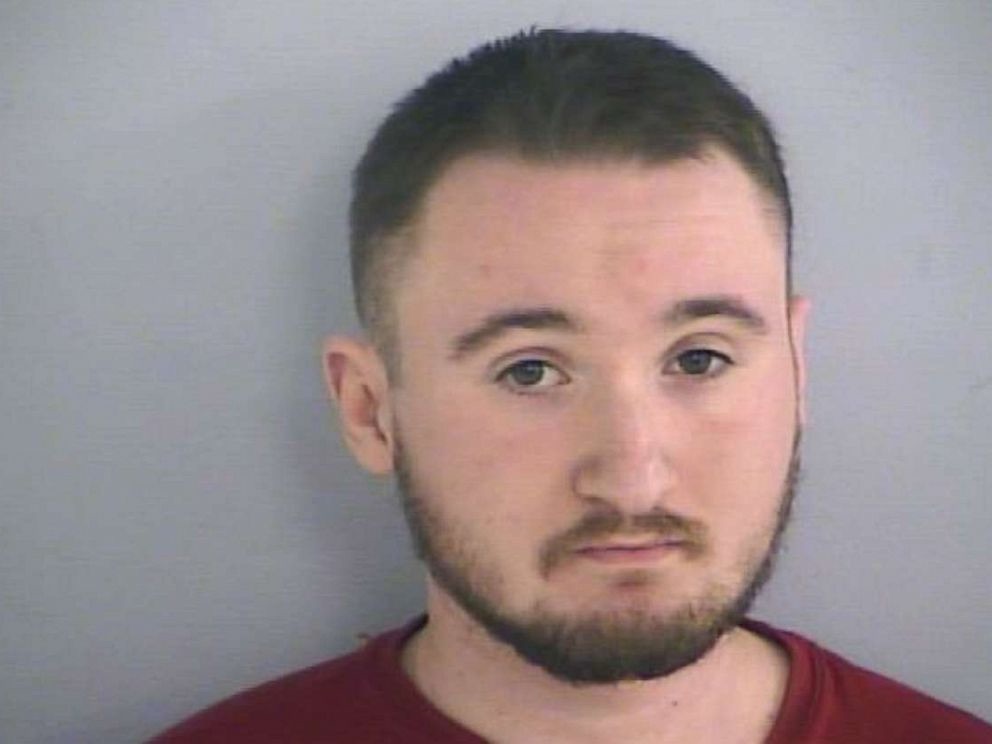
A 27-year-old Ohio man convicted of plotting a mass shooting at Ohio State University has moved into an apartment roughly two blocks from campus, within walking distance of sorority housing. The U.S. Department of Justice has asked a federal judge to impose new restrictions on his supervised release that would require him to relocate.
A hearing on the motion is set for June 25 in U.S. District Court in Cincinnati before Judge Susan J. Dlott.
Background on the conviction
Tres Genco pleaded guilty in October 2022 to one count of attempting to commit a hate crime. Court documents show that in 2019 and 2020 he planned a mass shooting at Ohio State University with a stated goal of killing 3,000 people, focusing on women at sororities.
Genco wrote a manifesto stating he would “slaughter” women “out of hatred, jealousy and revenge” and referred to death as the “great equalizer.” He signed one note “Your hopeful friend and murderer.” On the day he wrote the manifesto, he searched online for sororities at Ohio State and topics such as “planning a shooting crime” and “when does preparing for a crime become an attempt.” He also searched for Columbus police and Ohio State University police radio codes and accessed Facebook pages for university sororities.
In 2019 Genco purchased tactical gloves, a bulletproof vest, a hoodie bearing the word “Revenge,” cargo pants, a Bowie knife, a skull facemask, Glock magazines, and related items. He conducted surveillance near a university campus and kept notes documenting student activity and building access. Genco identified as an incel and idolized Elliot Rodger, who carried out attacks near a sorority house at the University of California, Santa Barbara in 2014.
In March 2020, after a report to authorities, Highland County sheriff’s deputies searched Genco’s residence and vehicle. They found a rifle with a bump stock, ammunition, body armor, and a modified Glock-style pistol hidden in a vent. Genco was arrested by federal agents in July 2021. As part of his plea he admitted possessing firearms in furtherance of the plot. He was sentenced on February 29, 2024, to 80 months in federal prison.
Release and apartment move
Genco was released from federal prison on April 30, 2026. He had lived in a halfway house from August 2025 to April 2026, where he was employed and had no reported violations. In mid-May 2026 he moved into the apartment near Ohio State’s campus.
The move was assisted by the parents of a former cellmate, Thomas Develin. Develin is serving a federal sentence after pleading guilty to making terroristic threats against a Columbus Jewish school and synagogues. One of Develin’s parents served as guarantor on Genco’s lease. Genco has stated he was a positive influence on Develin and shared his family’s Holocaust history to encourage Develin to reject antisemitic views.
DOJ motion for additional supervised release conditions
On May 26, 2026, the U.S. Department of Justice filed a motion asking the court to add conditions to Genco’s supervised release. The requested conditions include:
• Requiring Genco to live more than two miles from any university or college in Ohio, with the residence pre-approved by probation officials.
• Installing monitoring software on his electronic devices so probation officers can track his search history and online activity.
• Prohibiting him from entering the grounds of any Ohio college or university without prior approval.
• Banning contact with former cellmate Thomas Develin.
Prosecutors described the choice to move near the campus Genco had previously targeted as intentionally provocative and unsafe. Genco is already subject to a ban from Ohio State University’s campus.
Defense response
Genco’s attorney, Karen Savir, filed a response on May 30, 2026. The defense agrees to the device monitoring software and the no-contact order with Develin. It opposes the broad residency restriction and campus entry ban.
The filing states that Genco has made “great strides” in rehabilitation, has severed ties with misogynistic content, and was impressionable and affected by a traumatic upbringing at the time of the offense. The attorney argues that the government could have sought such conditions at sentencing and that the proposed rules would impose a stigma more sweeping than that placed on registered sex offenders, potentially hindering rehabilitation.
Ohio State University has stated it supports the DOJ motion, with student safety as its top priority.
The June 25 hearing will address whether the additional conditions will be ordered. Genco remains on supervised release under existing terms until the court rules.