
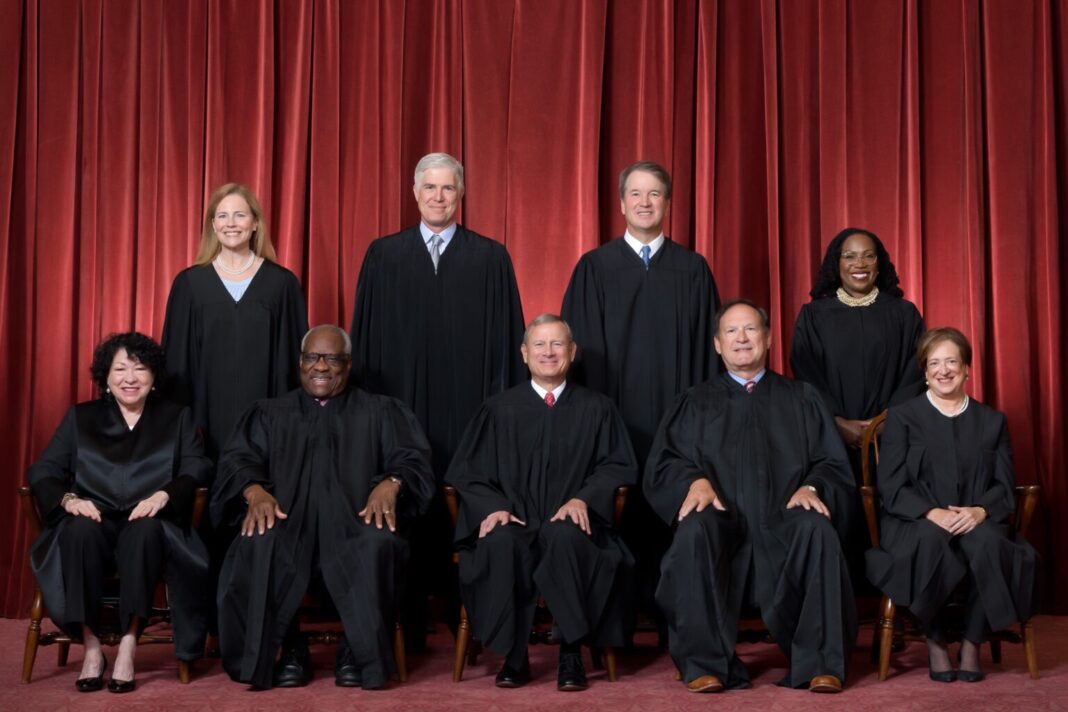
In a 6-3 decision issued Tuesday, the U.S. Supreme Court ruled that federal border officers do not need clear and convincing evidence that a lawful permanent resident committed a crime before placing that individual on immigration parole upon return from travel abroad.
The ruling came in Blanche v. Lau, a case involving Muk Choi Lau, a Chinese national and lawful permanent resident (green card holder) admitted to the United States in 2007. In 2012, while facing a New Jersey charge of third-degree trademark counterfeiting, Lau took a brief trip to China. Upon his return, immigration officers placed him on parole rather than admitting him as a returning permanent resident. Lau later pleaded guilty to a related offense and received probation. The parole designation allowed the Department of Homeland Security to treat him as an applicant for admission and pursue removal proceedings.
Justice Clarence Thomas, writing for the majority, stated: “Border officers did not have the burden to establish by clear and convincing evidence that Lau had committed a crime involving moral turpitude.” The Court held that the Immigration and Nationality Act does not require such proof at the border stage before deeming a returning lawful permanent resident an applicant for admission. Proof of the underlying offense can be established later in removal proceedings. The decision resolved a split among the federal circuit courts.
Justice Ketanji Brown Jackson dissented, joined by Justices Sonia Sotomayor and Elena Kagan. She wrote that placing Lau on parole effectively sentenced him to “immigration limbo” before he had been convicted of any crime. Jackson warned: “I worry that the Court has now handed the Government a massive blank check.”
The ruling expands the federal government’s authority to use parole status for lawful permanent residents who face criminal accusations when they reenter the country after international travel. It does not alter the government’s ultimate burden to prove removability in immigration court, but it lowers the initial threshold at ports of entry and facilitates enforcement actions.
This is a federal immigration decision that applies uniformly across the United States, including Ohio. Lawful permanent residents in south central Ohio who travel abroad for family, work, or other reasons could face additional scrutiny at the border if they have pending criminal accusations or certain criminal histories. Ohio does not maintain independent state immigration enforcement laws that override or expand upon federal border and admission procedures. Interactions between local law enforcement and federal immigration authorities in Ohio continue to follow established federal frameworks regarding detainers and cooperation.
Individuals with green cards are encouraged to consult a qualified immigration attorney before any international travel, particularly if they have any criminal matters in their background. Legal advice should be sought for personal circumstances, as outcomes depend on specific facts and case details.
The full Supreme Court opinion is available on supremecourt.gov.