
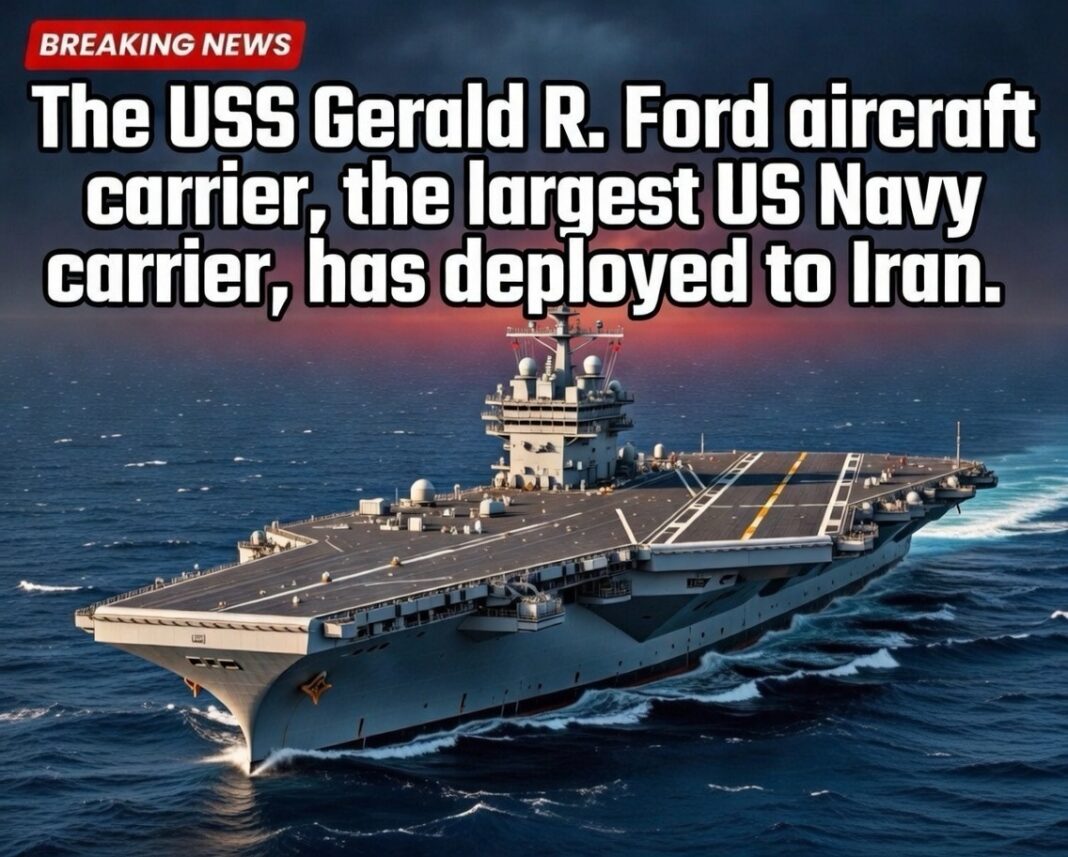
In a move that underscores escalating geopolitical strains, the United States has redirected the USS Gerald R. Ford, the world’s largest aircraft carrier, to the Middle East amid ongoing pressures on Iran over its nuclear program and domestic unrest. This development, confirmed by multiple defense officials and reported by leading news outlets, marks a significant buildup of American naval power in the region, potentially affecting global oil markets and, by extension, residents in south central Ohio.
Confirmation and Details of the Deployment
The USS Gerald R. Ford, a nuclear-powered supercarrier capable of carrying over 75 aircraft and more than 4,000 personnel, departed its original deployment in the Caribbean Sea following operations related to Venezuela. Initially set sail from Norfolk, Virginia, in late June 2025 for European waters, the carrier was rerouted to the Caribbean in November 2025. Now, under orders from President Donald Trump, it is en route across the Atlantic to join the USS Abraham Lincoln carrier strike group already positioned in the Arabian Sea, off the coast of Oman, approximately 700 kilometers from Iran.
Defense sources indicate the Ford is currently in the mid-Atlantic and could reach the Middle East within the next few weeks, potentially by late February or early March 2026. This dual-carrier presence is rare and serves as a show of force, with the Ford’s strike group including guided-missile destroyers such as the USS Mahan, Bainbridge, and Winston Churchill. The deployment extension means the crew, already at sea for over eight months, may not return home until April or May 2026, potentially breaking post-Vietnam War records for carrier deployments.
President Trump has publicly supported the move, stating it bolsters “tremendous power” in the region while expressing optimism about negotiations with Iran. He has also suggested that regime change in Iran “would be the best thing that could happen,” amid indirect talks mediated by Oman and Qatar. The buildup includes additional assets like B-52 bombers, F-35 fighter jets, and surveillance aircraft, representing about one-third of the US Navy’s deployed fleet focused on the area.
Background on US-Iran Tensions
The redirection comes against a backdrop of heightened friction between Washington and Tehran. The US has intensified its “maximum pressure” campaign on Iran, citing concerns over its nuclear ambitions, ballistic missile development, and a recent crackdown on protesters that has resulted in significant casualties. Indirect negotiations in Oman last week failed to yield immediate results, prompting Trump to signal readiness for further action.
Iranian officials, including Supreme Leader Ali Khamenei, have responded defiantly, warning of capabilities to counter US naval assets. Analysts from defense intelligence firms note that the US military posture appears geared toward potential sustained operations, including possible strikes on Iranian facilities like the Fordow nuclear site. However, no imminent conflict has been declared, and diplomatic channels remain open, with talks potentially resuming in Geneva.
What This Means for South Central Ohio
While the events unfold thousands of miles away, the implications could ripple into south central Ohio, a region reliant on affordable energy and manufacturing. Escalating tensions in the Persian Gulf, a critical chokepoint for global oil supplies, often lead to volatility in fuel prices. Ohio, with its heavy dependence on natural gas and petroleum for heating and transportation, could see higher costs at the pump and increased utility bills if disruptions occur.
Local economists point out that past Middle East flare-ups have impacted Ohio’s economy, affecting industries like automotive manufacturing in nearby areas such as Chillicothe and Circleville. Additionally, with Ohio hosting Wright-Patterson Air Force Base and a strong veteran community, many families in south central Ohio have personal ties to military deployments. Extended tours like the Ford’s raise concerns about sailor fatigue and readiness, as highlighted by Navy officials.
Residents should monitor updates from reliable sources, as any escalation could influence stock markets, including defense stocks like Lockheed Martin and Northrop Grumman, which have operations or suppliers in Ohio. For now, the situation remains a diplomatic standoff, but the carrier’s movement serves as a stark reminder of how international events can touch local lives.