
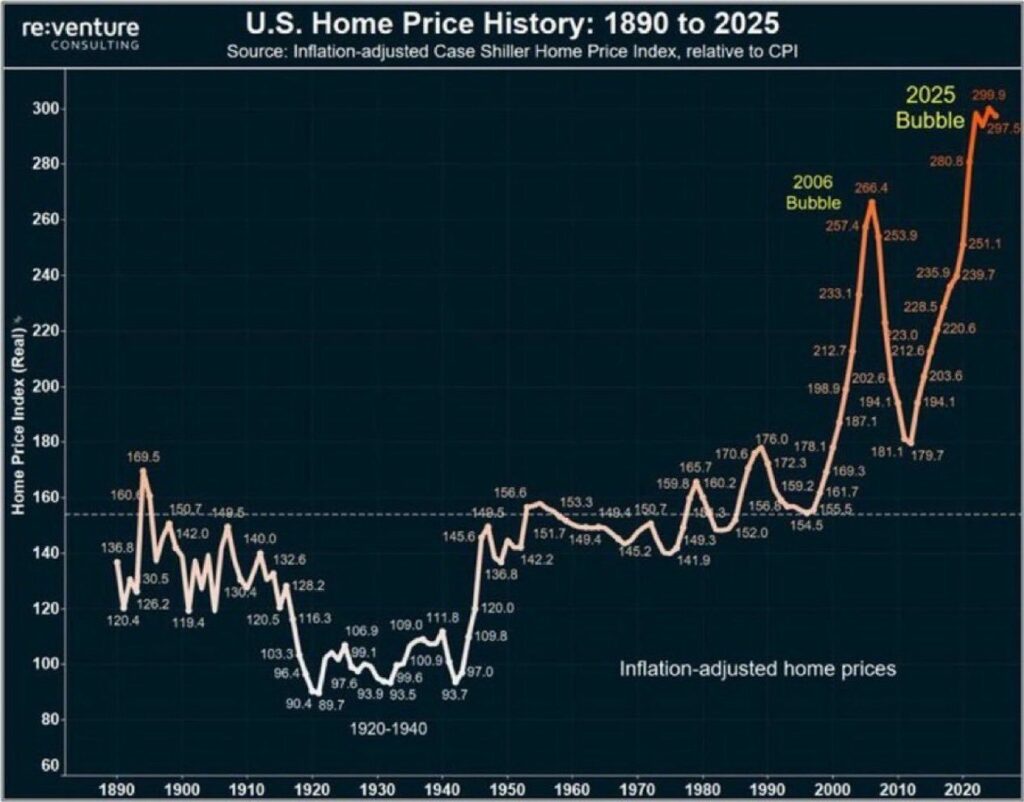
A widely shared post on X from @AFpost on February 16, 2026, featured a chart declaring that US home prices have reached their highest peak ever. The data matches the National Association of Realtors Existing-Home Sales Report released February 12, 2026. In January 2026 the median existing-home sales price rose 0.9 percent year over year to $396,800. This marks the 31st consecutive month of price increases and sets a new record for the month of January.
Nationally the housing market shows signs of gradual change. Existing-home sales fell 8.4 percent from December and 4.4 percent from January 2025, reaching a seasonally adjusted annual rate of 3.91 million units. That is the slowest pace since December 2023. Unsold inventory stood at 1.22 million homes, up 3.4 percent from a year earlier and equal to a 3.7-month supply. While still below the 6-month level that signals a balanced market, this represents the most consistent inventory growth in years. Homes are staying on the market longer (46 days in January versus 41 days a year earlier), and more listings are receiving price reductions. Yet prices continue to edge higher in this low-supply environment.
Viral online claims have also focused on real estate agents. Some reports suggest that about 71 percent of licensed agents closed zero transactions in 2025, based on figures showing roughly 923,543 of 1.3 million licensed agents with no sales. These numbers include many part-time, referral-only, or inactive license holders. Among active professionals the median number of deals is higher, though the slower market has increased competition and highlighted the importance of working with experienced, high-volume agents.
Ohio’s housing market closed 2025 on a steady note, according to data from Ohio REALTORS. Statewide existing-home sales reached 126,015 units for the full year, a 1 percent gain from 2024. The average sales price rose 6 percent to $256,775. Active listings grew 2.3 percent in December 2025, lifting the months-of-supply figure to 2.69. The market remains seller-friendly but is moving closer to balance.
Central Ohio, which includes areas near Ross County, followed similar trends. Closed sales rose 3 percent for the year, inventory increased 14.2 percent, and median prices showed modest gains with greater stability.
In Ross County and nearby counties such as Pickaway, Fairfield, Hocking, Vinton, Pike, Jackson, Scioto, Adams and Highland, the market offers far more accessible entry points than national or many Ohio metro averages.

Ross County median sale prices stood near $190,000 to $192,000 in early 2026 data. Zillow reported a typical home value of $191,956, up 2.2 percent over the past year. Redfin showed a median sale price of $190,000 in January 2026, with homes taking an average of 58 days to sell. These figures are roughly half the national median and give buyers in southern Ohio more negotiating power and lower monthly costs.
First-time buyers continue to face national headwinds from elevated prices, mortgage rates, and the challenge of saving for down payments. In southern Ohio the lower price baseline improves affordability. State and local programs offered through the Ohio Housing Finance Agency and county land banks provide down-payment assistance, closing-cost support, and other resources for qualifying buyers. Many experts point to Ohio communities, including those in the southern part of the state, as relative bright spots for first-time buyers in 2026 because home prices align more closely with local incomes.
The national picture of record prices, slowly rising inventory, and subdued sales volume points to a market that is gradually rebalancing. In Ross County and adjacent counties the combination of more affordable prices, added selection, and steady demand creates relatively buyer-friendly conditions amid broader tightness.
Buyers and sellers in the region should review the latest Multiple Listing Service data with a licensed local REALTOR, obtain mortgage pre-approval from a reputable lender, and schedule professional home inspections. Ohio real estate law requires clear disclosures and protects consumers through standard transaction procedures. Market conditions can shift quickly with changes in interest rates, economic data, or local inventory.