
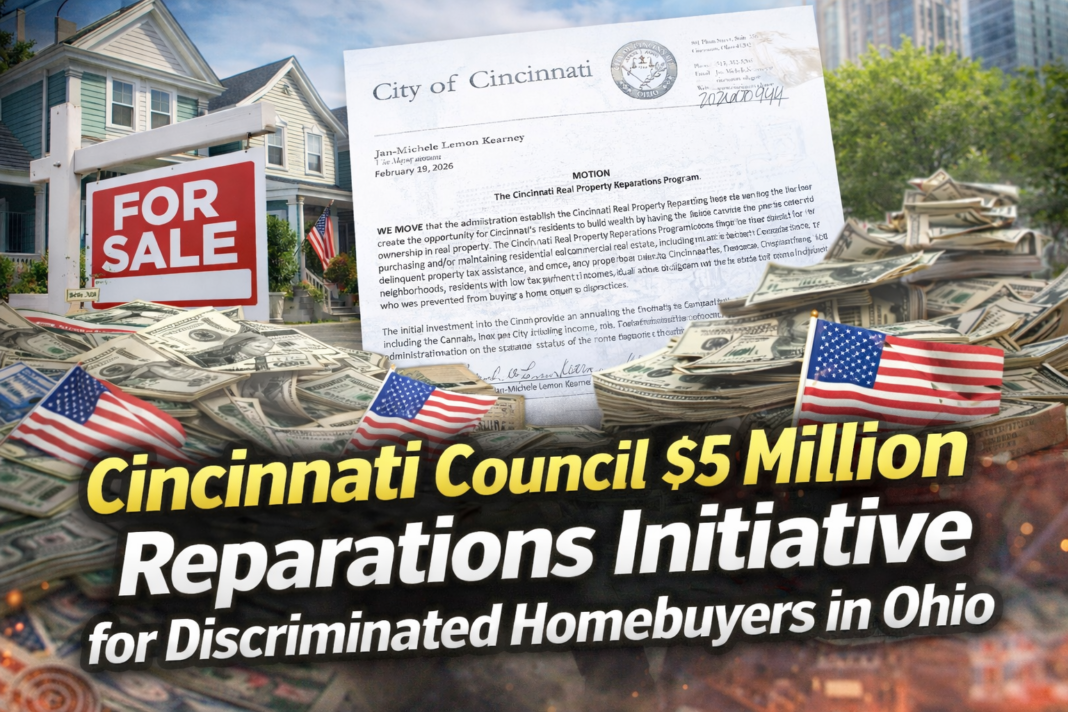
In a recent development sparking discussions across Hamilton County and beyond, Cincinnati Vice Mayor Jan-Michele Lemon Kearney and Councilmember Scotty Johnson introduced a motion on February 19, 2026, to establish the Cincinnati Real Property Reparations Program. This initiative aims to assist residents impacted by historical discriminatory practices in real estate, offering downpayment assistance, property tax relief, and emergency repairs for low- to moderate-income individuals or families. The program targets those prevented from homeownership due to past discrimination, with an initial funding allocation of $5 million drawn from the city’s cannabis tax payments and fiscal year 2027 capital budget. As a news outlet serving south central Ohio communities, including areas near Chillicothe and Portsmouth, this proposal highlights broader regional conversations about housing equity and access in the Buckeye State.
The motion builds on Cincinnati’s ongoing efforts toward racial healing and reparative justice. According to a 2024 report from Policies for Action, the city has been actively addressing decades of inequitable policies through coalitions like the Truth and Equity initiative, which focuses on dismantling systemic barriers. Additionally, the Cincinnati Black United Front has previously advocated for using proceeds from the Cincinnati Southern Railway sale to fund reparations and close the racial wealth gap, including identifying descendants displaced by 1950s urban renewal projects. These individual’s efforts underscore a commitment to rectifying historical injustices in housing, a critical issue for Ohio residents facing affordability challenges in cities like Cincinnati.
Next steps for the motion involve referral to the appropriate city council committee, likely the Housing and Growth Committee chaired by Johnson with Kearney as vice chair, for review and potential public hearings. If advanced, it would proceed to a full council vote, requiring a majority of the nine-member body for approval. Cincinnati’s council, composed of progressive-leaning members such as Mayor Aftab Pureval, Anna Albi, Jeff Cramerding, Mark Jeffreys, Evan Nolan, Meeka Owens, Seth Walsh, and Victoria Parks, has consistently supported equity-focused programs, including recent approvals for immigrant protections and human services priorities. The administration must also identify ongoing funding sources and provide annual reports on expenditures if implemented.
While the proposal has generated online debate, as seen in a February 26, 2026, X post by local resident Adam from Price Hill questioning its implications, its passage appears plausible given the council’s track record on similar initiatives. However, final outcomes depend on committee deliberations and public input. For south central Ohio readers monitoring statewide housing trends, this could influence broader discussions on property assistance programs, emphasizing the need for equitable policies to support underserved communities in the region.