
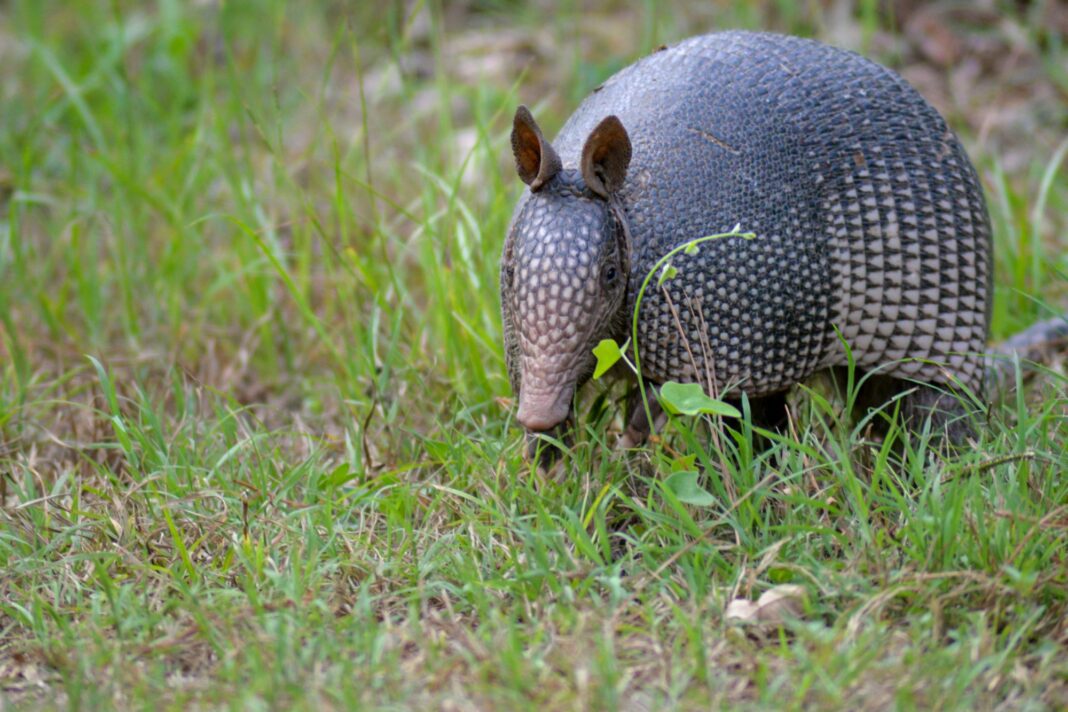
OXFORD, Ohio. Researchers at Miami University have documented what they describe as the first natural occurrence of an armadillo in Ohio. The animal was found as roadkill near the university’s campus and is now in a campus lab for study. It is slated for eventual display at the Hefner Museum of Natural History.
The school is Miami University in Oxford, in Butler County in southwest Ohio. It is often called Miami of Ohio to distinguish it from the University of Miami in Florida.
Dr. Tereza Jezkova, an associate professor of biology, said the find is “possibly the first documented occurrence of natural occurrence of armadillos in Ohio.” She said the animal appears to have reached Ohio without human help. “Well, I was not surprised. I was pleasantly surprised,” she told WLWT.
The specimen was described as gray and scaly, with distinctive eyes. Graduate students in Jezkova’s lab have been tracking the Mexican long-nosed armadillo as it moves north of the climate zone where its body would normally be expected to survive. “Right now, we don’t know how they do it, what the mechanisms are,” Jezkova said. Asked whether the animals are likely to harm other species here, she said, “No, so far, we don’t believe so.”
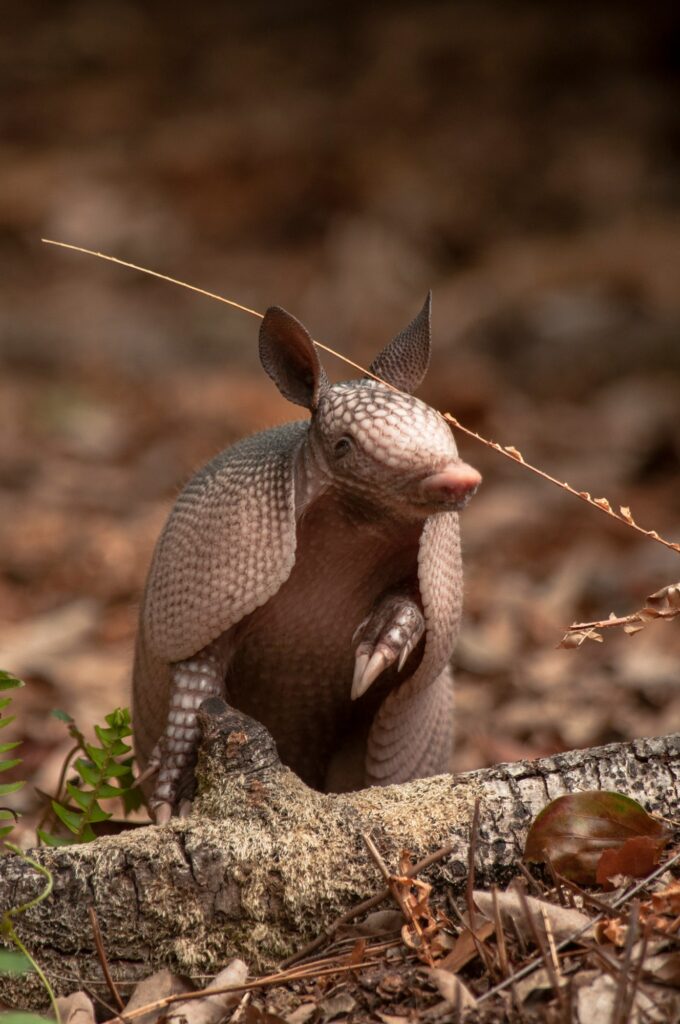
The Mexican long-nosed armadillo (Dasypus mexicanus) is the species expanding across the eastern and central United States. It was long treated as part of the nine-banded armadillo complex. Jezkova’s lab studies how mammals respond to environmental change. A doctoral student in the lab has been using genomic tools to study how this armadillo persists as it colonizes colder country.
The armored mammal is not new to North America. It crossed into Texas from Mexico in the 1800s and has been spreading east and north for more than a century. It is established in at least 17 states, including Indiana, Illinois, Kentucky, and Missouri. A 2025 paper in the journal Diversity mapped recent records and estimated that regular occurrences were then about 90 kilometers from Ohio. The authors said the most likely first natural entry would be the state’s southwest corner, along the Whitewater River or the Ohio River. Oxford sits in that predicted corridor.
Ohio already had two confirmed armadillo records. Both were dead animals found in 2021 along Interstate 71 ramps in Richland County near Mansfield and in Morrow County. The Ohio Department of Natural Resources treated those as probable hitchhikers that rode vehicles from established range and fell off far from the southern border, where a walking expansion would be expected to appear first. Unconfirmed social media reports have circulated since then. Jezkova’s team is drawing a distinction: a southwest Ohio animal that reached the state on its own.
Armadillos have poor insulation and do not hibernate well. Classic range studies tied stable populations to relatively mild February temperatures and enough rainfall. Researchers in neighboring states have linked the northward push to milder winters and wetter conditions. That is a scientific context for why biologists have been watching Ohio. A single roadkill does not by itself prove a breeding population. It does give researchers a specimen from the leading edge.
Some armadillos can carry Mycobacterium leprae, the bacterium associated with Hansen’s disease (leprosy). Transmission to people is uncommon and typically tied to close or repeated contact in parts of the South. Jezkova’s group and other researchers have not found evidence of that bacterium in armadillos collected in northern areas. The public should not handle dead or live wildlife with bare hands.
If the species becomes more common, the main practical issue elsewhere has been digging. Armadillos forage for insects and other invertebrates and can leave shallow holes in lawns, gardens, and golf courses. They also dig burrows. Jezkova said her group does not currently expect major harm to other wildlife in this region. Some biologists have noted a possible, limited risk to unguarded nests of ground-nesting birds. That remains a question for monitoring, not a documented problem in Ohio.
The specimen is being preserved in Jezkova’s lab. University officials say it will later go on view at the Hefner Museum of Natural History in Upham Hall. The museum is open to the public on weekdays when the university is in session.
If you see an armadillo in Ohio
Report it to the Ohio Department of Natural Resources Division of Wildlife with a location, date, and photo if you can take one safely. Do not pick up a live or dead animal. Ohio wildlife laws treat wild animals as a regulated public resource. Commercial nuisance wildlife control requires an ODNR license. Armadillos are not a native endangered species in Ohio, and they are not among the state’s listed dangerous wild animals. Possession, transport, and control still fall under state wildlife rules. When in doubt, call ODNR rather than moving the animal yourself.
Researchers will keep collecting records. One documented natural arrival does not mean Ohio now has a resident population. It does mean the northward march that biologists have tracked through Kentucky and Indiana has a confirmed footprint in the Buckeye State, in the county where scientists said it was most likely to show up first.