
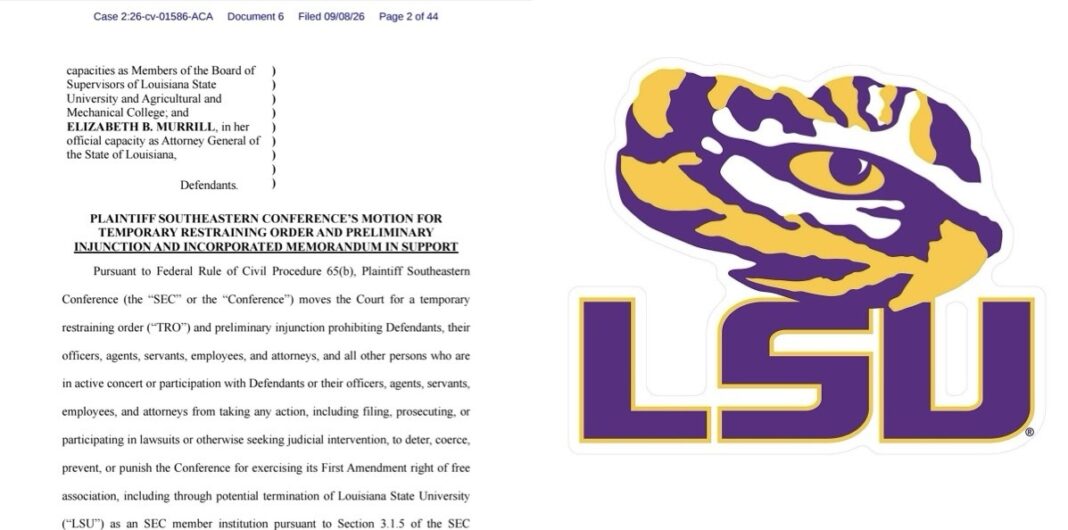

The Southeastern Conference is asking a federal judge for the legal power to kick LSU out of the league. The fight is over whether players who signed NFL contracts or appeared on NFL rosters can return to college football. Ohio State is not a party to the case. The Big Ten already banned those players from its own rosters.
Here is what court filings and major news outlets reported Tuesday.
What the dispute is about
The SEC filed a federal lawsuit in Birmingham, Alabama, against LSU officials after LSU recruited football players who had already entered the NFL pipeline. Named defendants include LSU President Wade Rousse, Athletic Director Verge Ausberry, head coach Lane Kiffin, members of the LSU Board of Supervisors, and Louisiana Attorney General Elizabeth Murrill.
The conference says it has longstanding “Professionalism Rules.” Those rules bar athletes who entered a professional draft, signed a pro contract, or appeared on a professional roster from competing for SEC teams.
Two players sit at the center of the public fight: tight end Dae’Quan Wright and defensive tackle Zxavian Harris. Both spent time in NFL camps this summer. A Louisiana state judge later cleared them to play. LSU enrolled them and allowed them to practice, but Kiffin left them off the roster for Saturday’s season-opening win over Clemson. LSU has kept roster spots open.
The SEC’s case is not only about those two names. In court papers, the conference alleges LSU waged a coordinated campaign to recruit former professionals, including players tied to the Cleveland Browns, Philadelphia Eagles, New Orleans Saints, and Tampa Bay Buccaneers. Those are allegations in a live lawsuit, not findings by a judge.
Two courts, two different fights
This is not one lawsuit. There are at least two tracks.
Louisiana state court: Athletes sued seeking another season of eligibility after NCAA rule changes. A Baton Rouge judge granted a preliminary injunction that, for now, blocks the SEC from using certain penalties against schools that roster those players.
Federal court in Alabama: The SEC sued LSU officials on First Amendment grounds. The conference argues it has a right of “expressive association.” In plain terms, the SEC says it should not be forced to attach its name, championships, and media brand to conduct it has publicly rejected.
State and federal courts are separate systems. A Louisiana order does not automatically decide the Alabama case.
What changed Tuesday
On Sept. 8, the SEC filed an amended complaint and asked for a temporary restraining order and preliminary injunction. The new filing says SEC presidents and chancellors will hold a special meeting Thursday, Sept. 10, “to decide whether to terminate” LSU as a member under Section 3.1.5 of the SEC Constitution and Bylaws. Removal would require a two-thirds vote.
The conference asked the Alabama judge to stop LSU officials and the Louisiana attorney general from blocking that meeting or undoing a vote. The SEC also argues LSU has shown a lack of institutional control and that school leaders have no meaningful control over Kiffin. Those claims come from the conference’s own filing. LSU has declined comment in several national reports.
ESPN reported the SEC is not expected to actually expel LSU this week. The filing is meant to lock in the conference’s legal right to enforce its rules and, if needed, end the association.
Next steps to watch
• Thursday, Sept. 10: SEC CEOs meet on LSU’s membership.
• Alabama federal court: A ruling could come on the request to protect that meeting and block interference.
• Louisiana case: The state injunction remains in play while that lawsuit continues.
• LSU’s roster: Wright and Harris were not listed for Week 1. Whether LSU adds them later is still an open question.
Nothing in the public record as of Tuesday afternoon shows a final expulsion vote or a final ruling on the players’ long-term eligibility.
Does this affect Ohio State football?
Directly: no. Ohio State is in the Big Ten. It is not a defendant in the Alabama case and is not a member of the SEC.
Indirectly: only as part of the wider eligibility mess. In late August, the Big Ten unanimously adopted its own rule. It bars football players from competing at a Big Ten school if they signed a professional contract, appeared on a professional roster, or declared for the NFL draft as an underclassman without withdrawing. Violations can bring a coach suspension for half the season and a fine on the school.
Ohio State coach Ryan Day said he did not like the idea of NFL returnees in college football. He also said Ohio State would have to consider it if other teams gained an advantage. The Big Ten rule closed that door for Buckeyes roster building.
For Ohio fans, the practical takeaway is simple. This lawsuit will not change Ohio State’s 2026 schedule, Big Ten standings, or current roster rules by itself. It could still matter later if national eligibility standards keep shifting through the courts.
Why the case matters beyond Baton Rouge
College football is split between court orders that expand eligibility and conferences that are writing their own bans. The SEC and Big Ten both moved in August to keep former professionals off their fields. LSU’s recruitment of those players turned a policy fight into a membership fight inside one of the sport’s richest leagues.
Until a judge rules and until the Sept. 10 meeting happens, LSU remains an SEC member. The players at the center of the case remain enrolled. They have not appeared in an LSU game this season.
Send a tip or correction to info@heritageheadlines.com.
Get the morning stories.

Send a tip or correction to info@heritageheadlines.com, or use the contact page.