
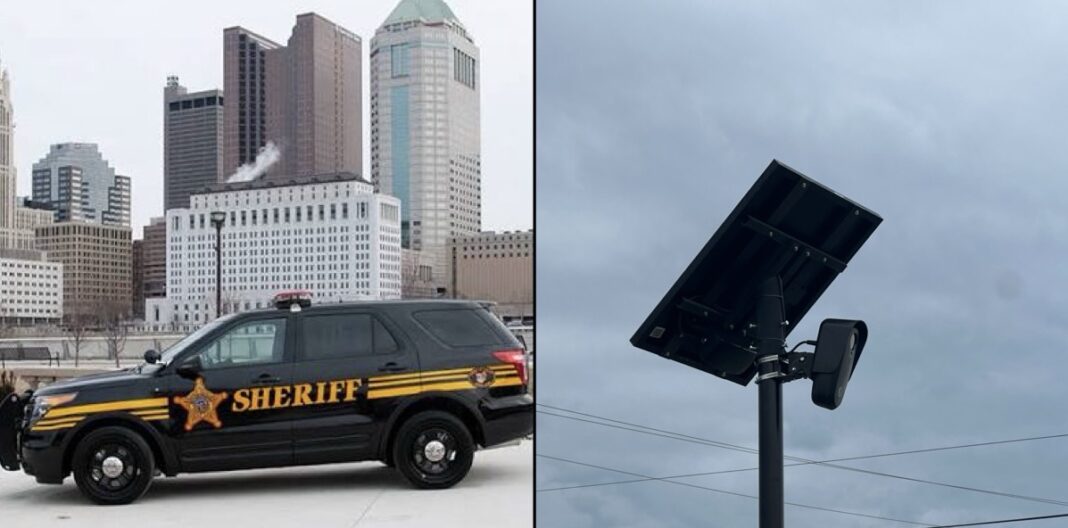
FRANKLIN COUNTY, Ohio — Franklin County Sheriff Dallas Baldwin said Thursday that an initial review of Flock camera use inside his office found searches by one deputy that “have raised concerns.” Baldwin did not name the deputy, did not describe the searches, and said no further details will be released until the investigation is finished.
The announcement came in an official statement posted Sept. 10 by the Franklin County Sheriff’s Office.
What Baldwin said happened
Baldwin said the office began reviewing Flock technology after learning of misuse at other agencies. The goal, he wrote, was to confirm the system is used only as an investigative tool.
The review flagged searches by a single deputy. Baldwin called the investigation early. The office is not identifying the deputy for that reason.
He did not say whether the searches were personal, whether any private person was targeted, or whether any criminal charge is being considered. Those facts have not been released.
Who is affected, based on what is known
The sheriff has not named a civilian victim, a license plate, or a township whose cameras were queried.
What is on the record:
• One Franklin County deputy is the subject of the internal review.
• Baldwin said he takes “the public’s concerns regarding their privacy interests seriously.”
• The sheriff’s office can reach Flock data through agreements with several townships, so searches by a county deputy can involve cameras those townships operate, not only county equipment.
• The deputy has not been publicly accused of a crime. Ohio law generally treats an unfinished personnel review as an employment matter, not a completed finding of misconduct.
Until the office finishes its work, readers should treat the case as an open administrative investigation, not a completed finding.
How Franklin County uses Flock, according to the sheriff
Baldwin drew a line that matters for coverage of this county.
The sheriff’s office, he said, has no contract with Flock for the stationary roadside cameras that have driven most of the statewide debate. He said the office has never had those fixed cameras.
The office does use mobile Flock cameras in limited cases, including homicide investigations and missing-person work. It also has agreements with several townships that let county investigators tap those townships’ Flock data when the office says the access is appropriate.
Baldwin did not say he is pausing that mobile use or those township agreements while the deputy is reviewed.
How the office says it is responding
Baldwin listed three steps:
1. Continue the investigation into the deputy’s searches.
2. Keep the deputy’s name off the public record while that work is early.
3. Build and put in place an internal auditing process so future Flock use can be checked.
He added that license plate cameras have been “valuable investigative tools in many cases,” but “must be used for legitimate investigative purposes.” He closed by saying no more information will be released until the investigation is complete.
Ohio still has no statewide statute that sets how long agencies may keep plate-reader data, who may search it, or how often those searches must be audited. A 2025 change to the Ohio Public Records Act did pull automated license plate reader images and data stored in a law enforcement database out of the public-records definition. Local sheriffs and councils still write most of the rules.
What this newsroom has already reported, and what is new here
Hopewell Heritage Headlines has followed Flock without treating every new statement as a first look at the technology.
On Sept. 3 this newsroom reported that Columbus tightened sharing and search rules after an audit found more than 15,000 immigration-related searches of that city’s Flock network. Columbus kept its cameras. It cut outside access, shortened how long plate images are stored, and required a supervisor before searches.
That Columbus story also recapped this newsroom’s earlier work: a Chillicothe chase that began with a Flock alert on a wanted driver, a Reynoldsburg internal probe that led two officers to resign after unauthorized lookups, and Florida Gov. Ron DeSantis ordering state-owned readers off state roads.
Thursday’s Franklin County statement is a different piece of the same map. The county sheriff says he does not run the fixed cameras Columbus is wrestling with. He does use mobile units and township sharing. And he now says one of his own deputies produced searches that his office cannot yet explain in public.
What remains unanswered
Baldwin’s statement leaves the core public questions open on purpose.
It does not say how many searches raised concern, over what period, or whether they involved a spouse, a neighbor, a political target, or an official case file that simply lacked a documented reason. It does not say whether the deputy still has system access. It does not say whether township partners have been notified.
Those answers, if they come, will come from the sheriff’s office after the investigation, or later from public records that Ohio law still allows, which may not include the plate images themselves.
Hopewell Heritage Headlines will update this story when the sheriff’s office names a finding, a policy change, or a completed audit process.
Do you think township sharing and mobile readers should follow the same public audit rules as city-owned fixed cameras? This newsroom will keep asking that question as Franklin County finishes its review.