
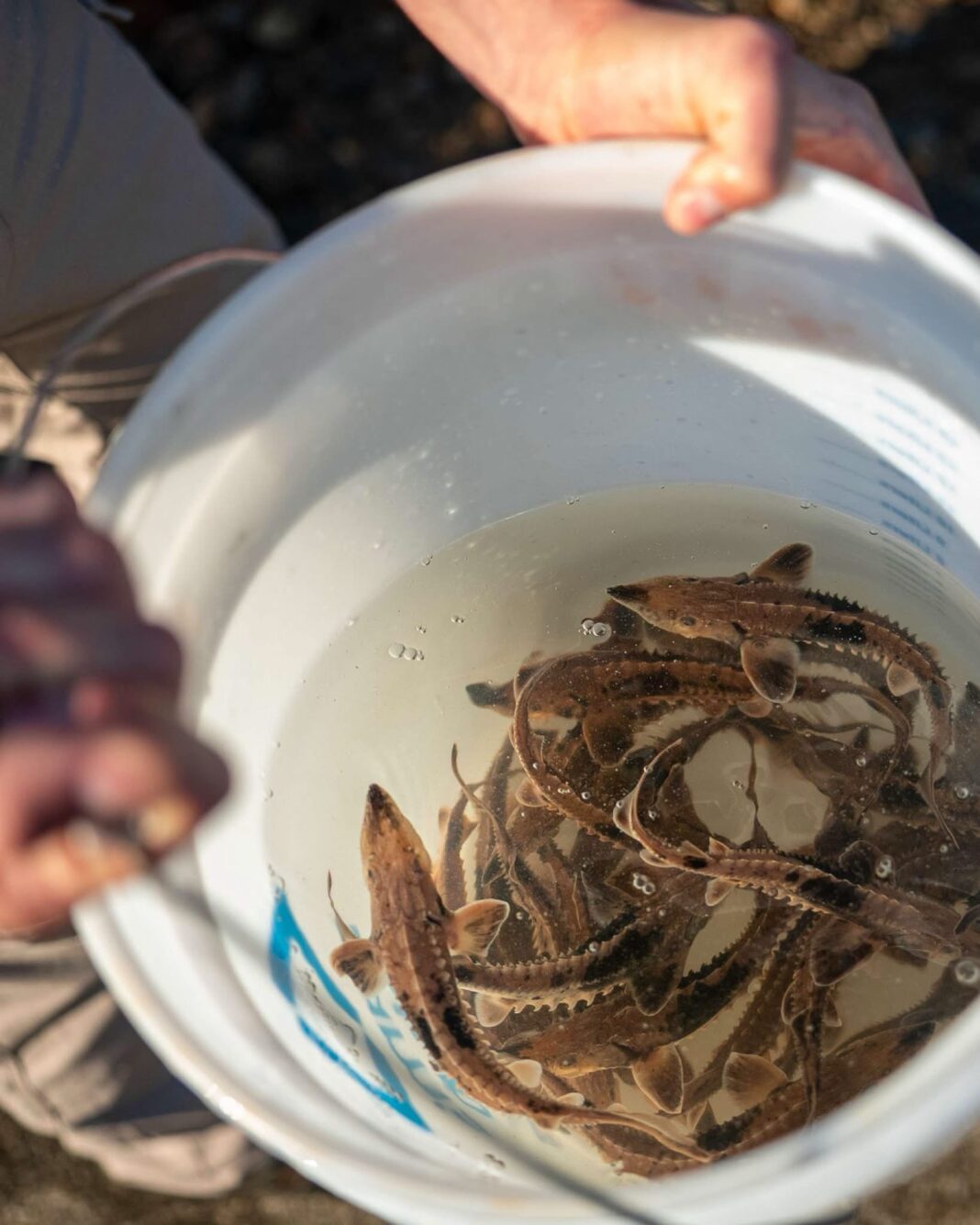

Ohio wildlife officials released 30 juvenile lake sturgeon into the Scioto River in November 2025, the first such stocking in that waterway as the state expands a long-term effort to restore a species once common in the Ohio River and its tributaries.
The 6- to 8-inch fish were surgically fitted with radio telemetry tags by researchers at The Ohio State University before release on the banks of the river just outside Circleville. The tags will allow biologists to track movement and survival in real time. Officials selected the Scioto in part because it is Ohio’s longest free-flowing river, stretching more than 200 kilometers before reaching Greenlawn Dam in Columbus, habitat that lake sturgeon historically used.
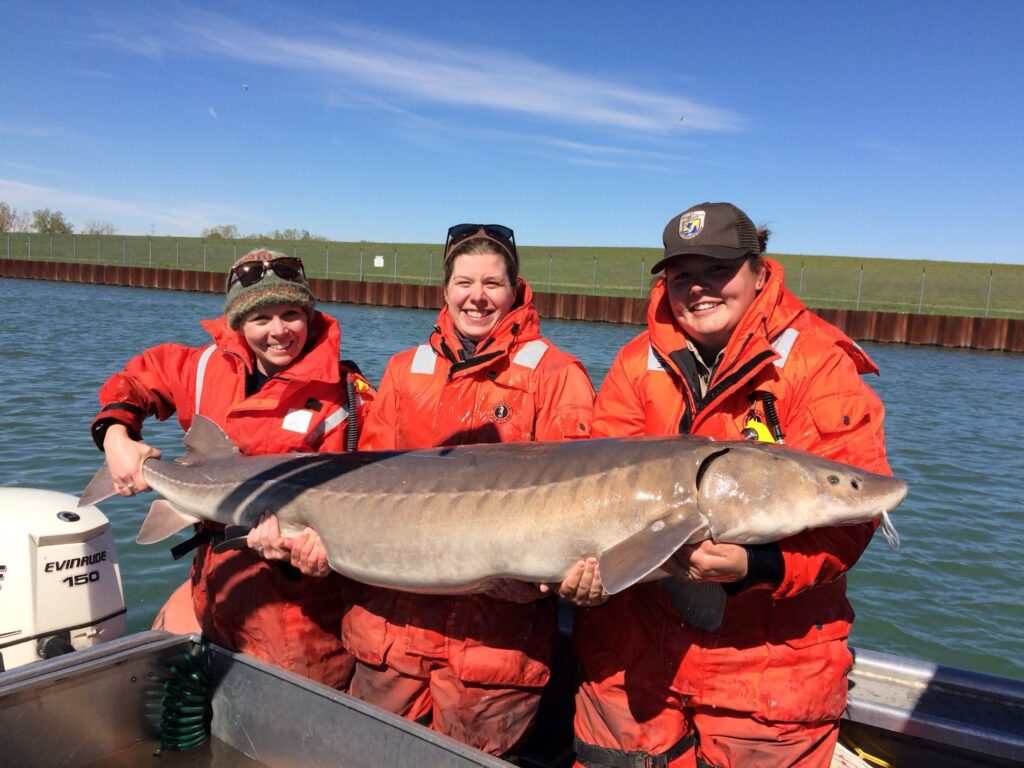
The U.S. Fish and Wildlife Service and the Toledo Zoo reared the young fish. The Scioto release formed part of a larger 2025 expansion that also placed sturgeon in the Cuyahoga and Sandusky rivers for the first time, along with continued stocking in the Maumee River. In October, crews released 2,000 sturgeon in the Cuyahoga during a public event, 3,000 in the Maumee at Toledo’s Sturgeon Fest, and 750 in the Sandusky.
Lake sturgeon are a state-endangered species in Ohio. They were once abundant in Lake Erie and the Ohio River, making spawning runs far up tributaries that included the Scioto as far as Columbus. Populations collapsed over the last 150 years after dams blocked access to spawning grounds and unregulated harvest took a heavy toll. Ohio lost all known spawning populations. Water-quality improvements and barrier removals have since made habitat in the Cuyahoga, Maumee, Sandusky, and Scioto rivers suitable again, according to the Ohio Department of Natural Resources Division of Wildlife.
The fish are bottom-dwellers that eat invertebrates and small fish. Adults can reach 6 to 8 feet and more than 200 pounds and live a century. Females may take up to 25 years to mature and spawn only every few years, so recovery is expected to take decades. Biologists anticipate that sturgeon released in the Scioto will move downstream into the Ohio River and, if they survive and mature, return to the river to spawn. Fish stocked in the northern rivers are expected to travel to Lake Erie.
Annual releases in the Maumee River since 2018 have already produced more lake sturgeon sightings in Lake Erie, giving officials reason for cautious optimism about the newer sites. The Division of Wildlife plans to continue stocking all four rivers in coming years with the goal of establishing self-sustaining populations in both the Lake Erie and Ohio River watersheds.
Lake sturgeon remain fully protected under Ohio law. Possession is prohibited. Anyone who catches one must release it immediately into the same water and is asked to report the encounter through the wildlife sighting tool at wildohio.gov. The same reporting request applies to anyone who simply sees a sturgeon.
The November Scioto release is a small, carefully monitored first step. Whether these 30 tagged juveniles, and those that follow, will one day spawn in the river they were returned to will not be known for many years. For now, the ancient fish are back in water they once used.
Send a tip or correction to info@heritageheadlines.com.
Get the morning stories.

Send a tip or correction to info@heritageheadlines.com, or use the contact page.
Latest bookings

Vinton County
Holly Ann Cahoon
Booked Oct 22, 2026
Vinton County
Franklin Ryan Pierce
Booked Oct 21, 2026
Vinton County
Stephen Dale Nimmick
Booked Oct 17, 2026



Individuals are presumed innocent unless proven guilty in court.