
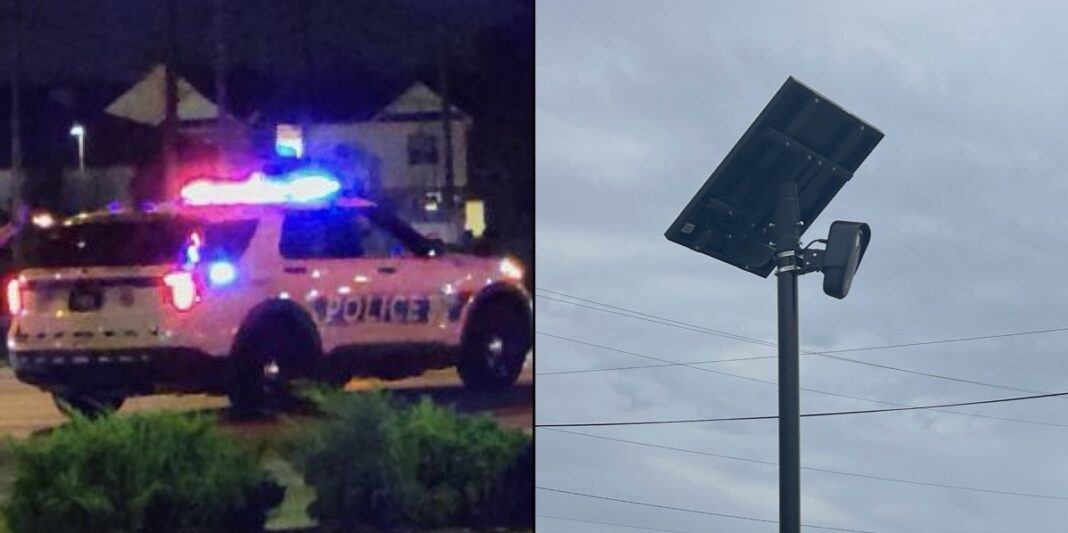

COLUMBUS, Ohio — Columbus did not take every Flock Safety camera off the street. It did slam the doors that let other agencies search the city’s license plate data.
That decision is now hitting close to home. Hopewell Heritage Headlines has already covered how these cameras work in our region, and how they can be used and misused. The question for readers is the same one Columbus is facing: are they necessary to catch dangerous criminals, or too much intrusion?
Why Columbus pulled back
Flock cameras photograph passing vehicles and log license plates, make, model, color, and other visible details. Police can search that database and, if sharing is turned on, so can agencies far outside the city.
This summer Columbus police disabled nationwide sharing of the city’s Flock network. After an audit of search logs, Mayor Andrew Ginther ordered statewide sharing stopped as well. The audit found the Columbus network had been searched more than 15,000 times for possible immigration-related reasons. Officials said there were no searches directly from U.S. Immigration and Customs Enforcement. The logs did include activity tied to other federal agencies and to some departments that work with ICE under 287(g) agreements.
Ginther said city resources are meant to keep residents safe, and that any other use is unacceptable. On August 28 he added tighter rules: keep plate images seven days instead of 30, require a supervisor before searches, block outside access unless Columbus police grant permission, halt 11 more cameras planned for this year, and create a kill switch if misuse is found.
The cameras themselves are still in use. City Council is still weighing whether to end the contract, which runs through the end of 2026. Columbus police have said the readers helped solve about 60 percent of last year’s homicides and also help find missing people. Deputy Chief Tim Myers warned that if the city dumps the tool, we will solve fewer crimes.
What Hopewell Heritage Headlines has already covered
This is not a new subject for this newsroom, and it is not only a Columbus story.
In March, Hopewell Heritage Headlines reported a high-speed chase in Chillicothe that started with a Flock alert. Chillicothe police received a hit on a black Kia tied to Anthony Thomas, who had active warrants. When officers tried to stop the car near Lunbeck Road, the driver fled. The pursuit covered about 4.6 miles, reached speeds reported as high as 120 mph, and ended when the vehicle struck Expressway Drive-Thru. Thomas was arrested and booked into the Ross County Jail.
That case is the argument supporters make. A camera flagged a wanted person. Police found the car. A dangerous chase still followed, but the alert is what put officers on the vehicle in the first place.
In August, Hopewell Heritage Headlines reported the other side of the same technology. Two Reynoldsburg police officers resigned amid an internal probe into alleged Flock misuse. Audits found unauthorized searches, including 53 lookups of the same plate by one officer. Department policy limits the system to official law enforcement work. Personal or unofficial use is prohibited. The case showed how quickly a crime-fighting database can be turned toward something else.
Hopewell Heritage Headlines also reported last week on the wider backlash, including Florida Gov. Ron DeSantis calling Flock cameras out of control and ordering them off state roads so Florida does not slide into a surveillance state. That story asked the same question now facing central and south-central Ohio: useful tool, or too much tracking?
People here are no longer watching this from a distance. They want solutions, and they want clear rules before more cameras go up in their own towns.
Critics, supporters, and the question for readers
Critics say the cameras watch everyone, not just suspects. They photograph ordinary trips, store that information, and make it searchable across a shared network. They point to immigration-related searches in Columbus, to officers who used the system for personal lookups, and to the lack of a tight statewide law in Ohio governing how long data is kept or who may search it. Their case is that once a record of everyday driving exists, it can be used for more than the crime that justified the camera.
Supporters say license plates are already visible on public roads, and that the cameras help police find homicide suspects, stolen cars, and missing people faster than old-fashioned canvassing. Columbus police credit Flock with a large share of recent homicide clearances. Locally, the Chillicothe pursuit began with a Flock hit on a wanted driver. Their case is that pulling the cameras down to protect privacy will also protect people police are trying to catch.
Columbus tried a middle path: keep the cameras, shrink retention, require supervision, and cut broad sharing. Critics say honor-system rules are not enough. Supporters say the tool is too valuable to throw out because it can be abused.
Do you believe these cameras are necessary to catch dangerous criminals? Or are they too much intrusion? Hopewell Heritage Headlines will keep following how Columbus, and communities closer to home, answer that.
Also booked
Columbus Restricts Flock Cameras After 15,000 Immigration-Related Searches
Send a tip or correction to info@heritageheadlines.com.
Get the morning stories.

Send a tip or correction to info@heritageheadlines.com, or use the contact page.
This WeekFranklin County archive
Latest bookings

Vinton County
Holly Ann Cahoon
Booked Oct 22, 2026
Vinton County
Franklin Ryan Pierce
Booked Oct 21, 2026
Vinton County
Stephen Dale Nimmick
Booked Oct 17, 2026

Individuals are presumed innocent unless proven guilty in court.