
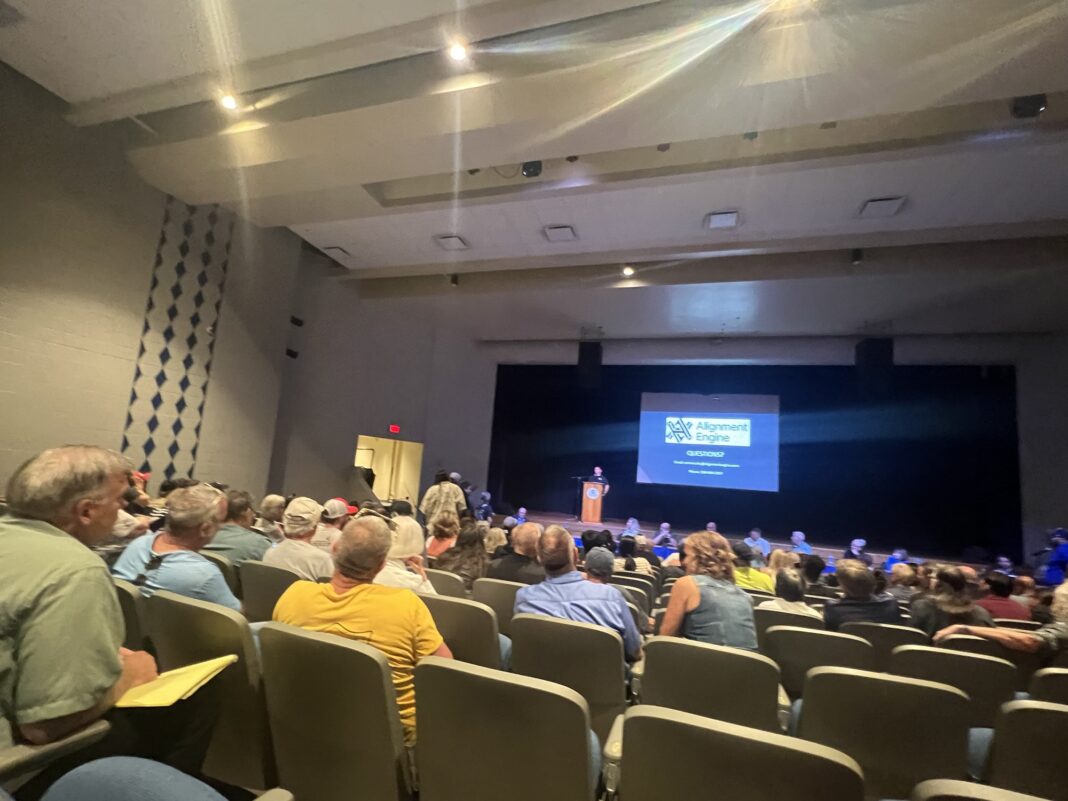
CHILLICOTHE, Ohio — A crowded public review meeting Tuesday night put the proposed computing project at the former Mead and Pixelle paper mill in front of residents, city council, cameras, and police.
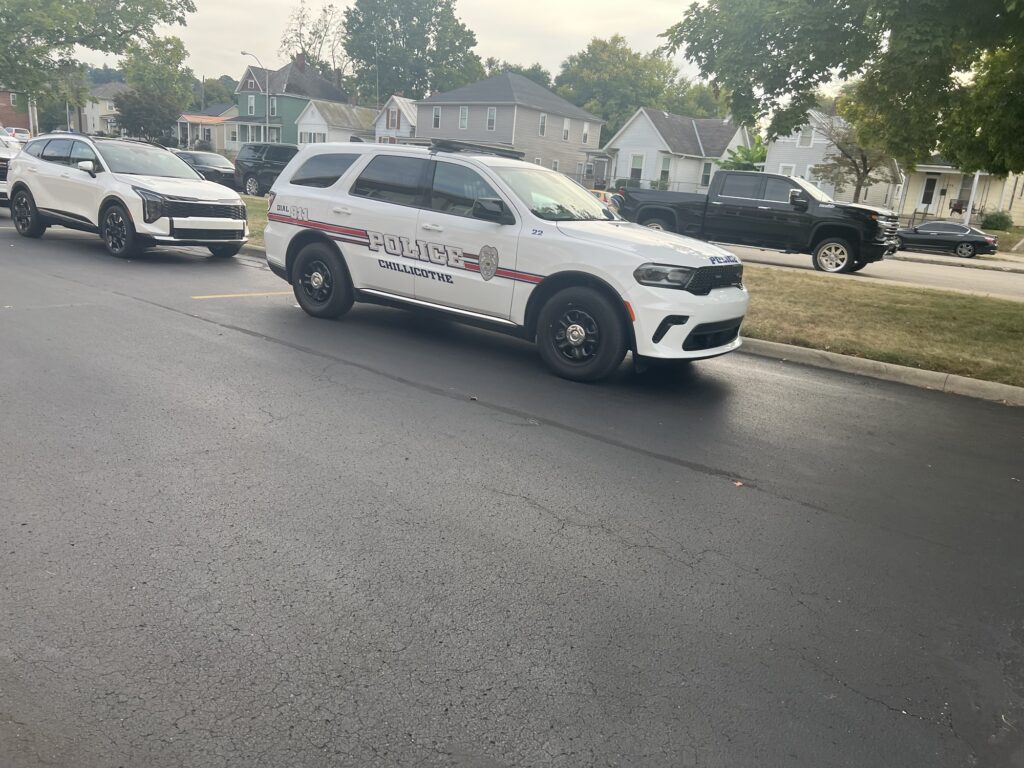
The session was held Sept. 8 in the Chillicothe High School auditorium, entered through the middle school doors at 381 Yoctangee Parkway. Council members Jeff Creed, Dan DeMint, Richard McQuirt, and Greg McKeever called the meeting after council passed a 60-day pause on new data center approvals that runs through Oct. 23. City council sat at the front of the auditorium. Police were present. The crowd stayed calm.
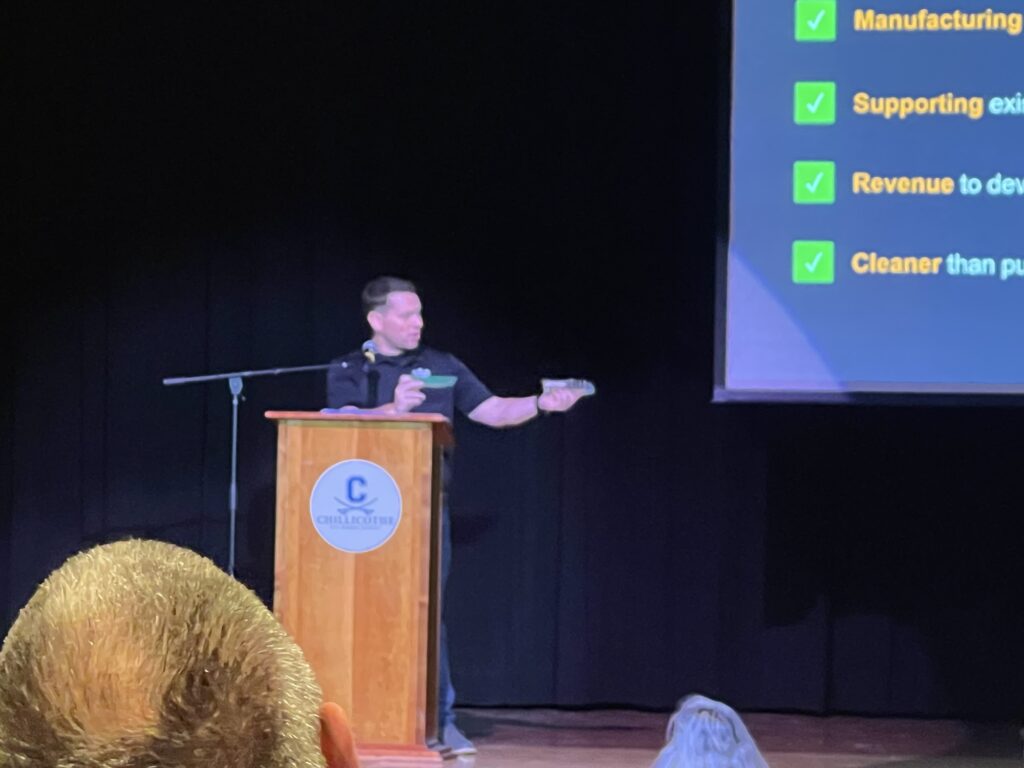
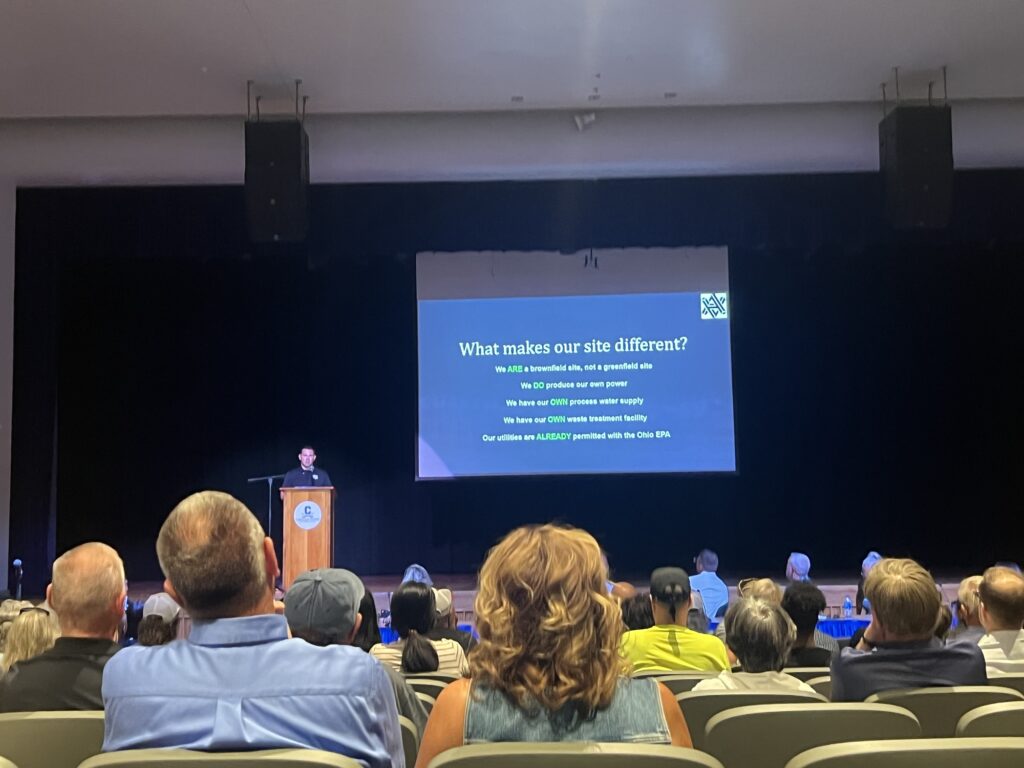
David Stanfill, chief technology officer for Canton-based Alignment Engine, gave the presentation. He said a slideshow would be released later. As of publication, the company had not provided that file after a request to the public contact it listed: community@alignmentengine.com or 330-649-2397.
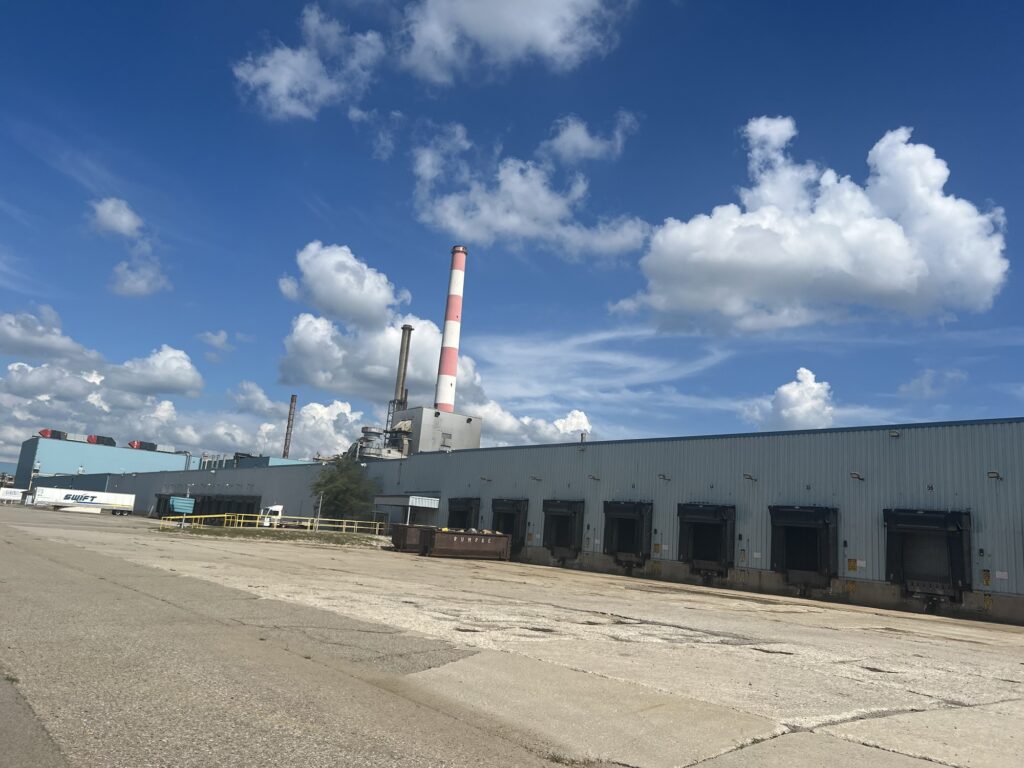
Alignment Engine is the computing partner tied to the July redevelopment plan for the mill campus now owned by U.S. Paper Mill LLC. That announcement described a high-performance computing campus and an anticipated $1.5 billion investment, along with glove manufacturing, aerospace work, and other industrial uses on the old mill grounds.
Stanfill told the room the company should have come sooner. He said Alignment Engine had been focused on building the project so it would not harm the community, and that this is not the data center many people think it is.
Data hall or data center?
Stanfill used both terms.
He described a data hall on about 6.5 acres in the former Chilpaco building near South Bridge Street and Eastern Avenue. He said that computing piece would be a small share of the roughly 490-acre mill property, about 1.3 percent. He said Alignment Engine would reuse an existing building rather than put up a new one, and that circuit board manufacturing is part of the same plan.
After questions from the audience, he said the project is a data center, but one with a smaller footprint than the large campuses going up elsewhere in Ohio. He said the equipment would handle everyday work for American businesses, including customer systems, freight routing, and software tools.
He framed the site as a brownfield reuse of an industrial campus, not a greenfield project on undeveloped land. He also said volume would not be the problem some residents have raised, and that noise at the nearest house would be about 35 decibels, below background levels and quieter than the old mill. Those figures come from the company and have not been independently verified.
Jobs, water, and power
Stanfill said the new site would bring real local jobs. Alignment Engine has posted openings and has described about 240 permanent jobs across 73 positions, with an average wage near $40 an hour in the company’s presentation and six-figure pay listed on some postings. He said the company wants to hire from the local talent pool, including former mill workers.
Residents asked how long those jobs would stay and whether the workforce would be unionized. Stanfill emphasized local hiring. He did not give a complete public answer on union status or a guaranteed job duration.
On utilities, he said Alignment Engine would generate its own power, draw water from wells already on the property, recycle it, treat it on site, and return it cleaner than it came out of the ground. He put water use at 28 million gallons a day and power use in the mid- to high-80-megawatt range. He said the company would use less energy than the old paper mill, pay for needed grid upgrades, and not shift that cost onto local ratepayers. He also said Alignment Engine has not asked for tax abatements.
Those utility and tax claims are the company’s. Review by the city and Ohio EPA will matter more than a slideshow.
The mill site already has a complicated environmental history, including groundwater issues tied to the former Wear-Ever plant and the Paint Street landfill. Stanfill said pumping existing wells helps keep the water table in check and that the company would keep handling landfill leachate through the on-site treatment system. That too is a company statement, not a regulator’s finding.
Residents split, and the mill’s shadow is still here
Not everyone in the room was opposed.
Chris Grubb Jr. identified himself as someone who has worked in a data-center-related field for about a decade. He told the meeting the Chillicothe project would be good for the town. He said he does not support every data center and pointed to a project in Wilmington that he opposes, including a claim that a building there could not be sold even for $1 to a previous investor. That comparison was his, offered from the floor.
A former Mead employee said the worst news of his life was hearing the mill was shutting down. Pixelle Specialty Solutions closed the Chillicothe mill on Aug. 10, 2025, after announcing the closure that April. Hundreds of jobs disappeared. U.S. Paper Mill LLC, tied to U.S. Medical Glove Company, bought the plant that October and has been running nitrile glove production while adding other industrial partners. The former employee said Pixelle did not do “a good enough job moving product,” and closed with, “It’s about the people.”
One resident asked why only one company representative was on stage. A group of employees in the audience raised their hands and answered, “Here.”
After the meeting, a woman who said she lives on Rennick Avenue told a reporter that when the mill was running, her basement would shake. She said she hoped neighbors would rise up to stop the new project, but she believed money was already in play and that it was too late. That was her opinion, not a finding.
What the city can still decide
The computing plan first reached much of the public in early July. City officials said they learned about it at the same time as residents. Council later assigned its engineering committee to study data center rules and then passed the emergency moratorium.
A separate dispute over site tours and nondisclosure agreements hung over Tuesday’s meeting, including Councilman Gunner Barnes’ public refusal to sign an NDA for a tour. Council members said they had not signed NDAs. Stanfill said Alignment Engine did not require them and that U.S. Paper Mill handles security at the complex.
The city still has weeks left on the pause. Council also used the session to talk about possible changes to Chillicothe’s Unified Development Code, the local land-use rules that would govern any data center or data hall if the moratorium expires or is replaced. The mill campus is already industrial. That limits how much the city can block by zoning alone, which is why permits, utility questions, and code language have become the live fight.
This newsroom has received emails from anonymous senders and from organizations. Those messages are being reviewed and fact-checked. They are not treated as established fact here. If Alignment Engine releases the promised slideshow, it will be examined and shared.
For now, Tuesday night answered some questions and left others where they were: who benefits, how long the jobs last, what the water and power numbers really mean, and whether Chillicothe is getting a modest reuse of an old mill building or the leading edge of a much larger computing campus.
Editor’s note: Quotes and observations from the floor and from conversations after the meeting come from a reporter who attended. Company figures on jobs, water, power, noise, and taxes are Alignment Engine’s claims unless otherwise noted. Pixelle’s 2025 closure, the U.S. Paper Mill purchase, the July 2026 campus announcement, the city’s 60-day moratorium, and the official meeting notice are on the public record.