
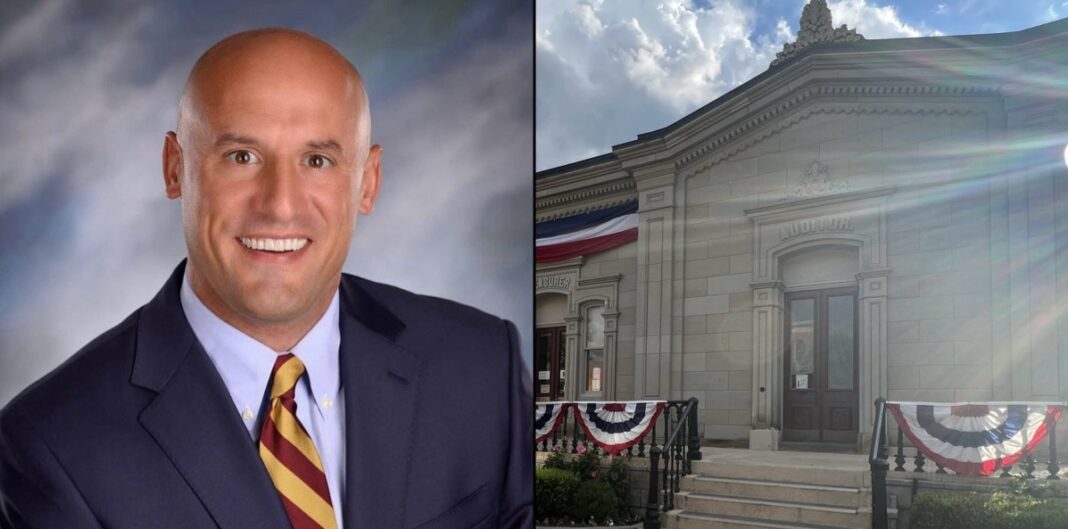

CHILLICOTHE, Ohio — Ross County Auditor Jeff Lehner says local governments in Ross County have cut the tax rates they control, and that the remaining problem sits in Columbus: the way Ohio funds public schools when property values go up.
In a statement, Lehner said recent state reforms helped, but that Ohio’s school-funding system “relies on unvoted tax hikes as values rise.” He said that problem can only be fixed in Columbus. If it is not fixed, he wrote, “property taxes will be abolished by the people of Ohio.”
On the local share of the bill, the part charged by the county, townships, and the city, Lehner said Ross County has been a leader.
“The County’s rate reduction will be extended into next year and has been cut by nearly half from its 2023 level (3.1 to 1.68 mills),” the statement said. “Township officials last year cut their tax rates to offset our state-mandated reappraisal and now are adopting resolutions to extend these rate reductions. City councilmembers last year did the same.”
Lehner framed the work as a political culture, not a one-year gesture.
“Local government is about controlling what we’re able within our authority to deliver for real people,” he said. “Here in Ross County we’re building a political culture around guarding taxpayers against unvoted tax hikes. For as long as I am Ross County’s Auditor, this will always be my highest priority.”
He asked residents to call township trustees and city officials and urge them to keep current tax rates for 2027, matching the county’s extension.
“Government has plenty without having to dig deeper into your pockets,” the statement said. “It makes budgets tighter no doubt, but tight budgets and the level of attention they require are critical safeguards against wasteful, unwise & unnecessary spending.”
The statement closed with the line, “TAXPAYERS FIRST.”
What that means on a bill: Ohio property tax bills mix several levies. County, township, and city rates are the piece local elected officials can reduce without a statewide change. School operating rates are different. Many districts sit at Ohio’s 20-mill floor, a minimum tied to state school funding. When home values jump after a reappraisal, that floor can push the school portion of a bill higher even when no new levy passed.
Ross County officials have said every school district in the county is at that 20-mill floor. State legislation signed in the current reform package created inflation-cap credits meant to limit how fast that school piece can grow. The county treasurer’s office has told taxpayers those school credits show up on the second-half bill, not the first.
Lehner’s statement does not replace a tax bill. Homeowners who want the exact millage on a parcel should use the auditor’s property search or call the auditor’s office. Second-half due dates and credit amounts come from the treasurer.
Send a tip or correction to info@heritageheadlines.com.
Get the morning stories.

Send a tip or correction to info@heritageheadlines.com, or use the contact page.
Latest bookings

Vinton County
Holly Ann Cahoon
Booked Oct 22, 2026
Vinton County
Franklin Ryan Pierce
Booked Oct 21, 2026
Vinton County
Stephen Dale Nimmick
Booked Oct 17, 2026


Individuals are presumed innocent unless proven guilty in court.