
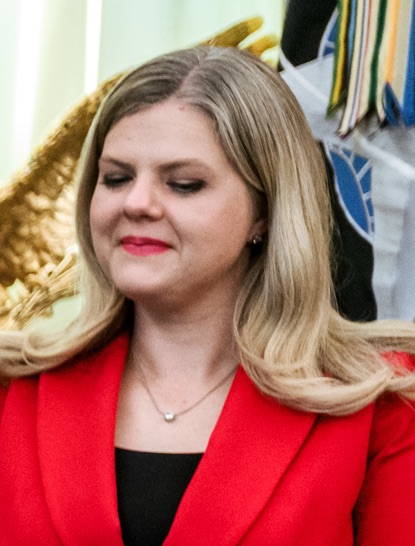

President Donald Trump has nominated Dr. Heidi Overton, a physician and White House domestic policy aide, to serve as the next commissioner of the U.S. Food and Drug Administration. The announcement came on August 19, 2026, via a Truth Social post, months after previous commissioner Dr. Marty Makary resigned in May 2026.
Overton currently serves as deputy assistant to the president for domestic policy and deputy director of the White House Domestic Policy Council, with a focus on health policy. She has worked closely with Health and Human Services Secretary Robert F. Kennedy Jr. and Centers for Medicare and Medicaid Services Administrator Dr. Mehmet Oz. Trump described her as a “ROCKSTAR” in his administration who has helped deliver on what he called the “MOST TRANSFORMATIVE Health Agenda in History.” He said she is known for taking on the “HARDEST issues” and bringing solutions that work best for the country, adding that Kennedy recently called her “ALWAYS RIGHT.” Trump stated she would work with Kennedy and Oz to deliver on priorities including faster cures, increased American innovation, major clinical trial reforms, lower drug prices, and more Make America Healthy Again (MAHA) wins.
Overton holds a medical degree from the University of New Mexico School of Medicine, completed general surgery training at Johns Hopkins, and earned a Ph.D. in clinical investigation from the Johns Hopkins Bloomberg School of Public Health. She is board-certified in public health and general preventive medicine. She previously served as a White House Fellow during Trump’s first term and as chief policy officer and vice chair for the Center for a Healthy America at the America First Policy Institute, a conservative think tank. She earlier crossed paths with Makary at Johns Hopkins.
Makary resigned after about 13 months in the role amid reported clashes with White House and health advisers over issues including the reintroduction of flavored vapes, a stalled abortion-pill review, and disagreements with certain drugmakers. Kyle Diamantas has served as acting commissioner since then. The FDA has lost more than 3,000 staff, including some division heads, over the past year and faces pressure to rebuild confidence among industry and public-health groups amid concerns about political influence. Overton’s nomination requires Senate confirmation.
What supporters are saying is positive
Supporters highlight Overton’s medical credentials, policy experience, and alignment with the administration’s health priorities. Brian Blase, president of the Paragon Health Institute, called her a “great choice,” stating she “has the highest character and is dedicated to improving American well-being and helping American patients get the best possible care.” Anti-abortion groups including Live Action and Americans United for Life have praised the selection, viewing her as an ally on restrictions related to the abortion pill mifepristone. Trump and administration figures emphasize her role in advancing reforms, innovation, and the MAHA agenda.
What critics and observers are saying raises concerns
Critics point to limited experience managing a large regulatory agency. Raymond James analyst and former Trump health official Chris Meekins said Overton “has degrees but seemingly no real experience running anything” and that her profile includes alignment with elements of MAHA messaging that some view as anti-science or anti-vaccine. He predicted industry would view the pick as “extremely troublesome,” that career staff might continue to leave, and that progress since Makary’s departure could reverse.
Overton has previously described mifepristone in terms such as “teleabortion” and “abortion-on-demand” and argued Congress should strictly regulate it “to protect women and children.” Critics note this positions her to potentially tighten access to medication abortion, which remains significant for patients in states with restrictions. She appeared at a White House event for an executive order seeking to reduce the childhood vaccine schedule and separate the measles, mumps, and rubella vaccine into individual shots. Some medical groups criticized that order, and observers have raised questions about vaccine policy direction. Reports also indicate she has at times frustrated parts of the MAHA movement over specific issues such as certain food or peptide policies.
Industry analysts have noted uncertainty about her impact on drug review processes and biopharma, given her limited direct regulatory experience. Some observers express broader concern about further politicization of the FDA at a time when the agency is already dealing with staff losses and public-health challenges, including recent foodborne illness outbreaks.
Overton was among finalists considered for the role. The nomination comes as the administration continues work on health priorities ranging from drug pricing and clinical trials to food and vaccine policy. Senate confirmation hearings are expected to examine her background, policy positions, and plans for stabilizing and leading the agency.
Send a tip or correction to info@heritageheadlines.com.
Get the morning stories.

Send a tip or correction to info@heritageheadlines.com, or use the contact page.