

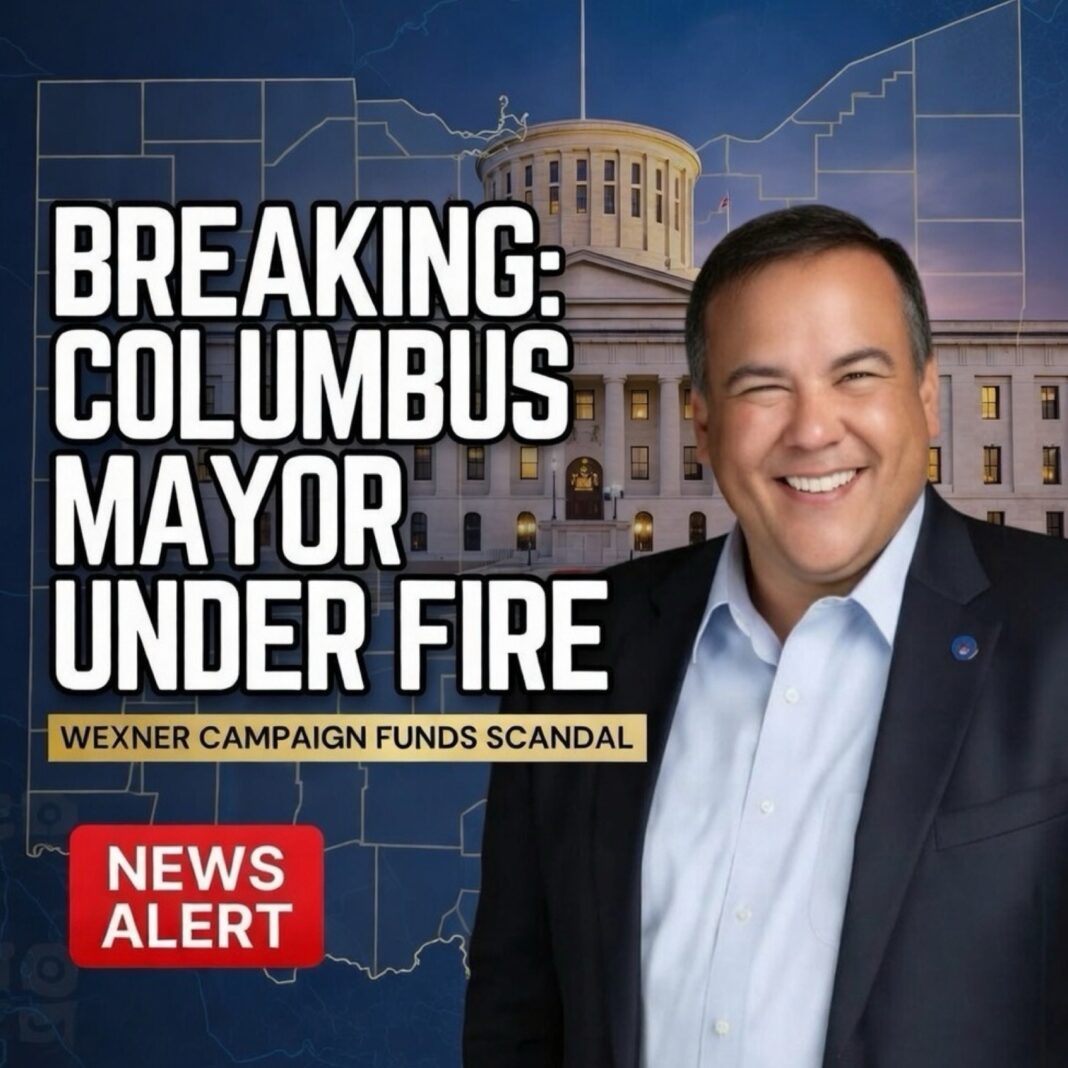
In a story drawing attention across Ohio, Columbus Mayor Andrew Ginther has come under fire for accepting substantial campaign contributions from billionaires Les and Abigail Wexner, amid renewed scrutiny of Les Wexner’s past ties to convicted sex offender Jeffrey Epstein. The donations, totaling $156,800 since 2016, have prompted several Ohio politicians to return similar funds to charity, but Ginther has so far declined to do the same. This development raises questions about campaign finance ethics and political influence in the state, with potential ripple effects reaching into southern Ohio communities like those in Ross County.
The contributions came to light through public records and were highlighted in a recent WOSU report, which detailed donations from the Wexners to various Ohio politicians. According to the data, Les Wexner contributed $91,800 to Ginther’s campaign, while Abigail Wexner added $65,000. These funds were channeled through political action committees such as the New Albany PAC and Limited Brands PAC, which supported initiatives like the Columbus bond package approved by voters in November 2025. The Wexners, founders of Limited Brands and long-time influential donors in Ohio politics, have given to both Republicans and Democrats over the years.
The timing of the controversy aligns with the release of Epstein-related documents by the U.S. Department of Justice on December 19, 2025, which named Les Wexner as a co-conspirator in a 2019 FBI investigation into Epstein’s sex trafficking activities. Although Wexner has never been charged with any crime, the files included references to his interactions with Epstein, including a photo of Epstein with the Wexners. Epstein, who died by suicide in 2019 while awaiting trial, had a decades-long financial relationship with Wexner, managing portions of his wealth and even holding power of attorney from 1991 until their association ended in 2007. Wexner has publicly stated that Epstein misappropriated $46 million from him, and he severed ties upon discovering the misconduct.
Critics, including social media users and political commentators, have labeled the donations as potentially corrupt, especially given Epstein’s crimes. However, the contributions themselves appear to comply with Ohio’s campaign finance laws. Under current limits set by the Ohio Secretary of State, individuals can contribute up to $16,615.67 per election period to local candidates like mayors, with adjustments for inflation every two years. Since the Wexner donations spanned multiple election cycles from 2016 onward, the total amount does not exceed legal thresholds when broken down by period. These are standard campaign donations, typically made via check or electronic transfer through PACs, and must be reported publicly.
Ginther, a Democrat who has served as Columbus mayor since 2016, addressed the issue in statements to media outlets. At a press conference last week, he described allegations involving Epstein as “pretty awful and disgusting and unacceptable and criminal actions,” but noted he was unaware of any evidence implicating Wexner directly. In a separate response, Ginther reiterated, “The crimes of Jeffrey Epstein and his associates are reprehensible and disgusting,” while emphasizing that no criminal charges have been filed against Wexner. His office has indicated they will monitor ongoing investigations, including Wexner’s upcoming congressional deposition, but has not committed to returning the funds.
This stance contrasts with other Ohio officials who have chosen to donate their Wexner contributions to charities focused on human trafficking prevention and victim support. For example, U.S. Rep. Mike Carey (R), whose district includes parts of southern Ohio, announced he would redirect his funds after reviewing the Epstein files. State Sen. Michele Reynolds (R) and others cited emerging information and a desire to avoid distractions as reasons for their decisions.
Ginther’s handling of the matter adds to a history of controversies during his tenure. Past issues include allegations from a former executive assistant who claimed she was required to perform unpaid campaign work, leading to a $195,000 settlement with the city in 2024. In December 2024, a special prosecutor declined to charge Ginther over a phone call to a judge regarding a Greyhound bus station case, finding no evidence of obstructing official business. Earlier in his career, as a Columbus School Board member, Ginther faced scrutiny in a data-scrubbing scandal and for accepting contributions linked to a red-light camera vendor. More recently, in January 2026, Ginther drew backlash, including from high-profile figures like Elon Musk, for his policy of non-cooperation with ICE on immigration enforcement, citing public safety concerns.
While the story centers on Columbus in central Ohio, it has implications for southern Ohio residents. U.S. Rep. Mike Carey’s District 15 encompasses Ross County and adjacent areas, including Chillicothe, where state-level decisions influenced by major donors can affect local infrastructure, education, and economic development. Governor Mike DeWine (R), who received $66,484 from the Wexners, oversees policies impacting the entire state, including southern counties. Residents in Ross, Pickaway, and Fayette counties, which our news site covers, may see indirect effects through funding for regional projects or anti-trafficking initiatives tied to these donations. As Ohio’s political landscape evolves, southern Ohio communities remain vigilant about how such contributions shape governance from Columbus to local levels.
This situation underscores the ongoing debate over transparency in campaign finance, particularly when donors have controversial associations. As investigations continue, including Wexner’s testimony before Congress, more details may emerge that could influence public opinion and future elections in the Buckeye State.