

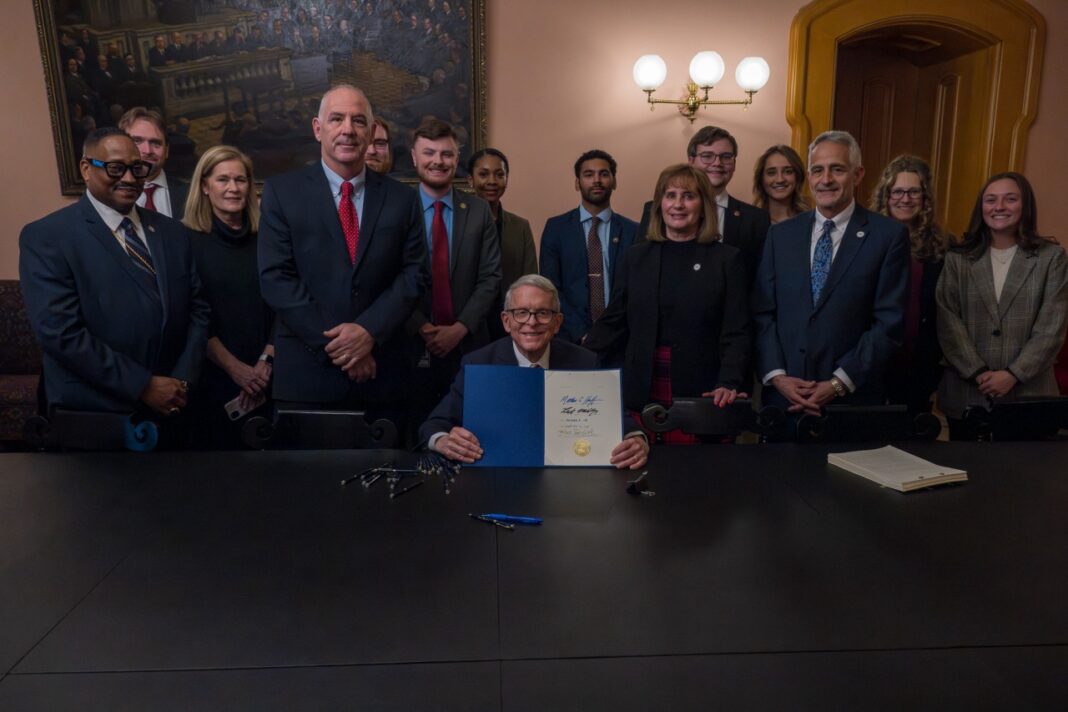
Ohio Senate Bill 56, signed into law by Gov. Mike DeWine in December 2025, has become one of the most contentious pieces of legislation in the state’s emerging cannabis sector. The bill revises rules for the medical and adult-use marijuana programs approved by voters in 2023 (Issue 2) while effectively banning the sale of most unregulated intoxicating hemp products outside licensed dispensaries. Key hemp-related provisions take effect in March 2026.
What the Bill Actually Does
SB 56 consolidates adult-use and medical marijuana regulations under the Division of Cannabis Control. Among its changes:
• Caps dispensaries at roughly 350–400 statewide, with 500-foot buffers from schools, churches, and playgrounds, and a one-mile separation between new stores.
• Lowers maximum home-grow plants from 12 to 6 per residence.
• Caps THC potency (e.g., extracts at 70%, edibles at 10 mg per serving/100 mg per package).
• Bans public smoking or vaping of marijuana except in private residences (with exceptions for rentals and childcare facilities).
• Prohibits possession of marijuana not purchased from an Ohio dispensary or grown at home.
• Most significantly for small businesses: Prohibits the retail sale of most intoxicating hemp-derived products (delta-8 THC, certain THC beverages, HHC, and synthetics exceeding 0.4–2 mg total THC per package, depending on the exact provision) anywhere except licensed dispensaries. These products were previously sold without age gates, mandatory testing, or strict labeling in gas stations, convenience stores, smoke shops, and other retailers.
The bill also redirects some marijuana excise-tax revenue previously earmarked for social-equity and addiction programs into the general fund and repeals the Cannabis Social Equity and Jobs Program.
Why the State Says It’s Beneficial
Republican sponsors and the DeWine administration frame SB 56 as necessary “cleanup” legislation that honors the will of voters while closing dangerous loopholes.
Key arguments from proponents:
• Child protection: Before the bill, intoxicating hemp products were sold with no age verification, often in candy-like packaging, and contained untested synthetics or high THC levels. Gov. DeWine and supporters repeatedly highlighted products marketed to children. “Marijuana cannot be marketed to kids… Intoxicating hemp, on the other hand, can and does look like candy. And they do it on purpose,” DeWine said during debates.
• Public safety and oversight: The bill imposes clear rules on possession, transport, advertising, and use (e.g., no smoking in cars, original packaging requirements) and aligns Ohio’s program with a pending federal ban on intoxicating hemp.
• Regulatory clarity: Sponsors said Issue 2 left vague language that prevented proper tax distribution to host communities and created an unregulated “gray market” competing unfairly with taxed, tested dispensary products. Sen. Stephen Huffman (R-Tipp City), the lead sponsor, stated the bill delivers “regulations that protect Ohio’s children, without overriding the will of Ohioans.”
Licensed marijuana industry groups (Ohio Cannabis Coalition, Coalition to Regulate Marijuana Like Alcohol) largely support the hemp restrictions, arguing the unregulated market sold dangerous, untested products and undermined the legal, taxed industry voters approved.
The Alleged Impact on Small Businesses and Local Communities
Opponents—primarily hemp retailers, manufacturers, and the Ohio Healthy Alternatives Association—call SB 56 a “disaster” that will shutter thousands of businesses and eliminate tens of thousands of jobs.
The most repeated claim: SB 56 will close an estimated 6,000 small businesses and cost Ohio roughly $1 billion in annual economic activity. This figure comes directly from the “Ohioans for Cannabis Choice” referendum campaign and has been echoed in news coverage and statements from affected retailers. Earlier industry estimates during a related 2025 executive order cited more than 4,000 retailers (including over 2,000 dedicated smoke/hemp shops) selling these products, with some stores deriving 50–90% of revenue from them. Industry groups projected 20,000+ job losses when including indirect effects.
Many convenience stores, gas stations, and family-owned smoke shops invested heavily in inventory that will now be unsellable or restricted to the limited number of dispensaries. Retailers have described the change as an existential threat, with some warning of immediate closures, mass layoffs, and destroyed stock. The campaign argues the law overrides voter intent, criminalizes previously legal products, and harms consumers who prefer accessible, lower-potency options.
Important caveat on the 6,000 figure: It originates from hemp-industry advocates and the referendum drive; no independent, verified statewide count of businesses that would fully close has been published in legislative analyses or neutral economic studies. Many convenience stores and gas stations sell these products as a side business, so the total number of outright closures may be lower than 6,000, though revenue losses and partial closures could still be widespread. The licensed cannabis industry counters that the referendum is funded by hemp interests seeking to preserve an unregulated market that undercuts taxed dispensaries.
What Happens Next
A citizen referendum effort is collecting signatures to place repeal of the bill’s first three sections (the bulk of the changes) on the November 2026 ballot. If successful, voters will have the final say.
Ohio Senate Bill 56 highlights a classic regulatory tension: one side sees essential protections for children and a level playing field for a new legal industry; the other sees government overreach that punishes small entrepreneurs who operated in good faith under federal hemp law. As the March 2026 deadline approaches and signature-gathering intensifies, the debate is far from over.